
Garden Flooding &
Surface Water Drainage Solutions
We investigate the cause before recommending remedial drainage works.
Investigation-led drainage solutions for flooding and standing water across Hertfordshire.
Heavy rainfall can expose drainage problems that stayed hidden during drier weather.
Water across gardens, driveways and patios, drains overflowing, saturated ground or water moving towards a building all point to drainage that is no longer coping. We establish the cause before recommending any excavation, because what looks like a failed soakaway is often a blocked pipe, incorrect levels or runoff from surrounding land.
Water Appears
Standing water, saturated ground, overflowing drains or water tracking towards the building.
Investigate The Cause
Levels, existing drainage, discharge points and ground conditions are assessed before anything is dug.
Install The Right Drainage
Evidence-led drainage and groundworks, installed and reinstated by the same team.
Flowcraft provides drainage investigation, diagnosis and groundworks across Hertfordshire, so the same team can investigate the problem and carry out the works that resolve it.
Signs Your Garden Has A Drainage Problem
If you recognise any of these signs around your property, it is worth investigating before the next heavy rainfall makes the problem worse.
Pooling water after rainfall
Puddles that linger long after the rain has stopped.
Soggy or waterlogged lawn
Grass stays soft, squelchy or saturated for days.
Overflowing drains & gullies
Water bubbling up from drains during rainfall.
Water collecting near the house
Runoff tracking towards walls, doors or air bricks.
Water takes days to drain away
Slow drainage that suggests a blockage or failed soakaway.
Damp patches on walls or floors
Persistent moisture that may indicate underground drainage failure.
Symptom vs Likely Cause
A quick guide to what your symptoms usually point to. Site investigation confirms which applies.
Water pools near the house after rain
Blocked or collapsed drain, incorrect levels, or runoff arriving from higher ground.
Drains and gullies overflow during rainfall
Failed or undersized soakaway, silted pipework, or a system beyond its capacity.
Lawn stays soggy for days afterwards
Poor infiltration, compacted or clay ground, or a lack of land drainage.
Water is always present, even in dry spells
Leaking or burst underground pipe, or a persistently high water table.
Driveway or patio floods in one spot
Blocked channel or gully, insufficient collection points, or falls directed to a single outlet.
Flooding started after building work
Increased impermeable area, altered roof drainage, or drainage connected to an unsuitable system.
Why Does My Garden Flood When It Rains?
Garden and property flooding can have many different causes. During periods of heavy or prolonged rainfall, the amount of water arriving at a property can exceed the capacity of the ground or existing drainage infrastructure to deal with it.
This is why simply installing another drain is not always the correct answer.
The first objective should be to understand how water is moving across and beneath the site.
How Flowcraft Investigates Flooding Problems
Our investigation starts with the affected area itself, answering five simple questions before anything is dug.
- 1Where is the water appearing?
- 2Where is it coming from?
- 3Where are the high and low points across the site?
- 4Which direction is the water naturally travelling?
- 5Where is the existing drainage intended to take it?
From there, we can begin tracing the problem back towards its source.
Not sure where the water is coming from? Read why gardens flood after heavy rain and what to record before a visit.
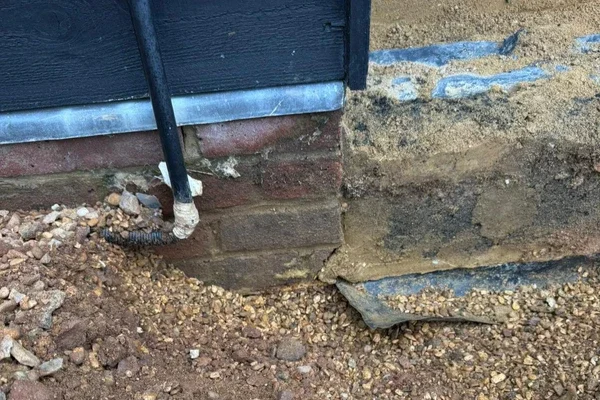
Site Levels & Water Movement
Topography decides where rainfall concentrates, so we map the falls across gardens, patios, driveways and surrounding land.
- Where water naturally collects
- Whether water is directed at the building
- Runoff arriving from neighbouring ground
Checking Existing Drainage
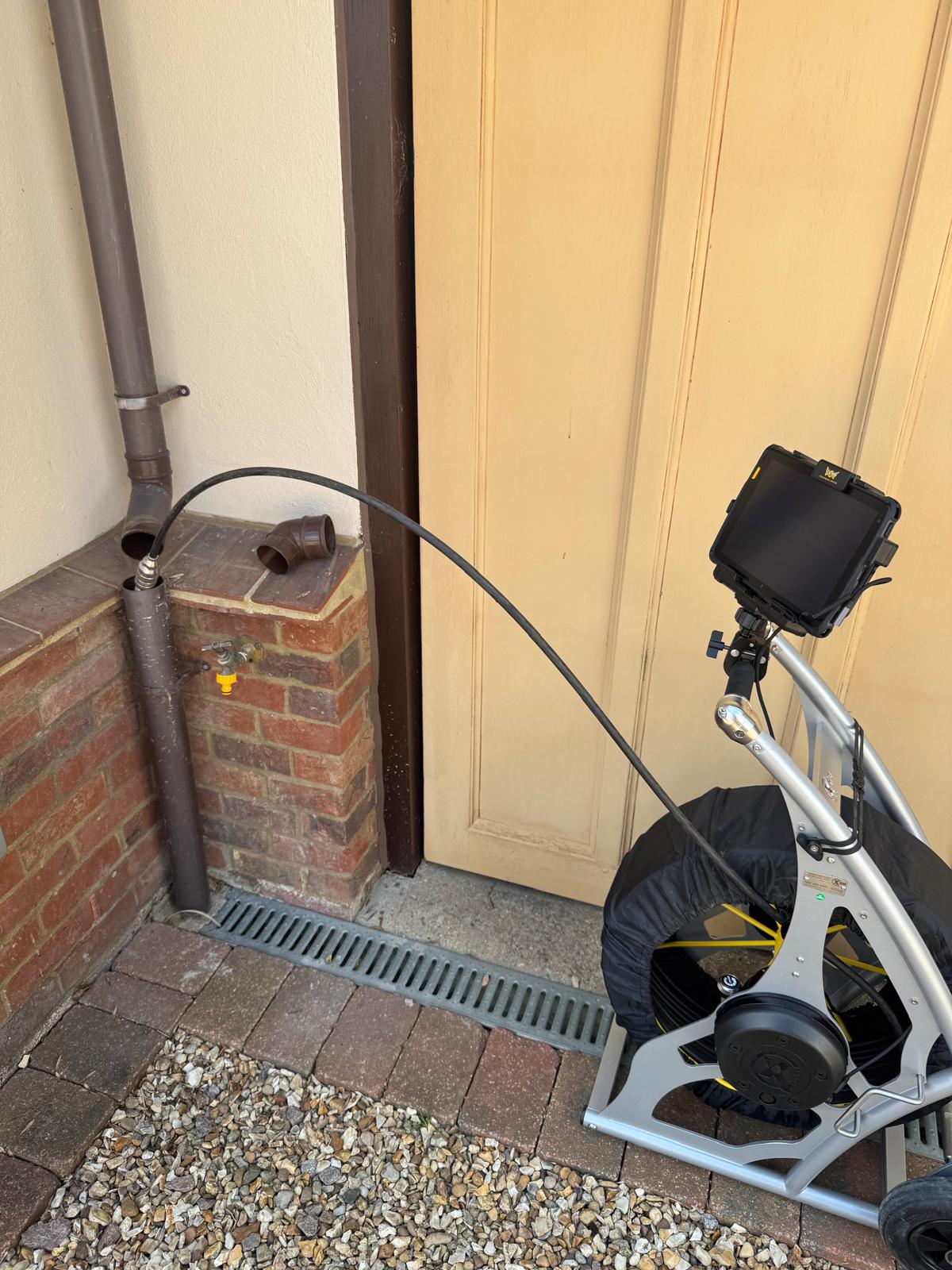
If water is meant to enter a drain, the next question is whether that system still works. CCTV reveals defects hidden underground.
- Blockages, silt and root ingress
- Collapsed, cracked or displaced pipework
- Poor or incorrect connections
Soakaways & Outfalls
Soakaways lose performance over time. We establish where drainage discharges and whether that destination still accepts water.
- Silt and debris contamination
- Restricted surrounding infiltration
- Systems undersized for today's catchment
Is The Water Actually Rainwater?
Not every surface water problem is rainfall. Volume, location and behaviour tell us whether something else is feeding it.
- Water present in dry weather
- Damaged or leaking underground pipework
- Persistently high groundwater
Flowcraft's approach is based on a simple principle
Investigate First.
Excavate Second.
Drainage problems can become expensive when works are undertaken without understanding the underlying cause. Installing a French drain, additional gully or new soakaway may appear to solve the visible symptom, but if the real problem lies elsewhere within the drainage system, the flooding can return during the next period of sustained rainfall.
By understanding the existing drainage arrangement, ground conditions, levels, runoff and likely source of the water, we can recommend works based on evidence from the site.
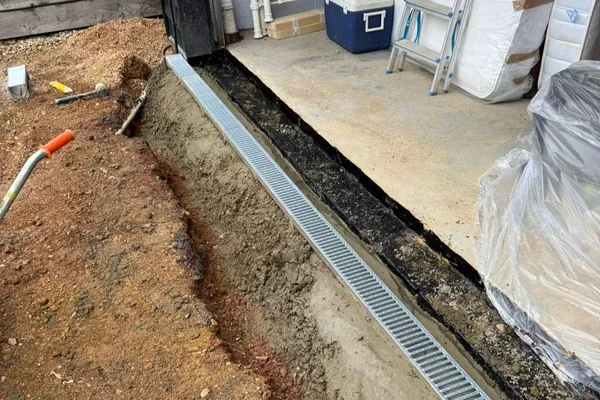
Surface Water Drainage Solutions
Once the cause has been established, Flowcraft can design and install new drainage infrastructure where required. Every site is different, so the appropriate solution depends on factors including the volume of water, available discharge routes, ground conditions, existing drainage infrastructure, site levels and surrounding environment.
Depending on the findings of the investigation, works may include:
- New surface water drainage systems
- Replacement or additional drainage pipework
- New gullies and drainage channels
- Soakaway installation or replacement
- Land drainage
- Drainage improvements to gardens and landscaped areas
- Driveway and patio drainage
- Drainage diversions
- Repairs to damaged or collapsed drainage
- Surface water attenuation
- Improvements to existing drainage infrastructure
- Excavation and associated groundworks
- Reinstatement following drainage works
Where infiltration drainage such as a soakaway is being considered, ground conditions need to be suitable. Flowcraft can undertake or arrange the necessary site investigation and infiltration testing to help establish whether infiltration is an appropriate drainage solution before significant construction work begins.
Considering a French drain? Our guide explains how it works and what needs checking before installation.
Failed & Inadequate Soakaways
A soakaway should let surface water disperse gradually into suitable ground. Not every site suits infiltration drainage, and existing soakaways do not perform indefinitely: they silt up, deteriorate, become undersized or were built in unsuitable ground.
"What looks like a failed soakaway is often a blocked pipe feeding it."
Before replacing anything, we establish:
- Where it is located
- What areas of the property discharge into it
- Whether the incoming drainage is functioning correctly
- Whether the soakaway is accepting water
- Whether surrounding ground can adequately infiltrate the water
- Whether the existing system is appropriately sized for its catchment
Where a new soakaway is proposed, infiltration testing establishes whether the ground is suitable and informs the design of the new system.
A new soakaway should not be sized or recommended solely by looking at the soil. Read how a BRE 365 soakaway test establishes the site-specific infiltration rate.
Blocked, overflowing or slow-draining soakaway? See how we diagnose itDrainage Problems On Clay Ground
Clay-rich soils are common locally and bring particular surface water challenges.
Slow infiltration
Clay absorbs water far more slowly than sands, gravels or suitable chalk.
Saturation & runoff
In prolonged rainfall the upper ground saturates, causing standing water and more surface runoff.
Soakaways that fill, not drain
Built without ground testing, a soakaway in clay can simply fill with water and never discharge.
Alternative strategies
Where infiltration is unsuitable, attenuation or piped drainage may be the correct route.
Not sure a soakaway will work on your site?
We carry out infiltration testing and site assessment first, so the drainage design suits the ground rather than guessing at it.
Flooding Around Buildings
Standing water close to a property should not be ignored. Repeated saturation around buildings can create ongoing problems and severe rainfall can allow water to reach thresholds, garages, air bricks and other vulnerable areas.
Where water is moving towards a building, we investigate the surrounding levels and drainage to understand why. The solution may involve intercepting water before it reaches the building, improving existing drainage, altering how surface water is collected or constructing additional drainage infrastructure.
The objective is not simply to move the visible water. It is to create a controlled route for surface water that works with the levels and drainage characteristics of the property.
Driveway & Patio Flooding
Driveways, patios and other hard surfaces create concentrated surface water runoff because rainfall cannot naturally infiltrate through impermeable materials. Problems can become particularly noticeable where large areas drain towards a single gully, channel or soakaway.
If that system becomes blocked, damaged or overwhelmed, water can quickly begin collecting across the surface.
Flowcraft can investigate the existing drainage arrangement and determine whether the problem lies with the collection points, underground pipework, discharge point or overall capacity of the drainage system. Where necessary, new drainage infrastructure can then be installed to provide a more effective solution.
Drainage Investigation Before Major Groundworks
Drainage excavation can be disruptive and potentially expensive. For this reason, we believe investigation should form part of the decision-making process before significant remedial works are undertaken. Depending on the property, this might include:
The level of investigation required depends on the complexity of the problem. Some drainage defects can be identified relatively quickly. More complicated sites may require several methods of investigation before the drainage arrangement becomes clear.
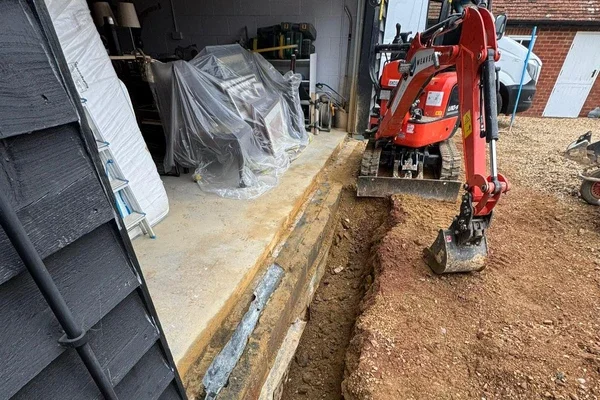
From Investigation Through To Construction
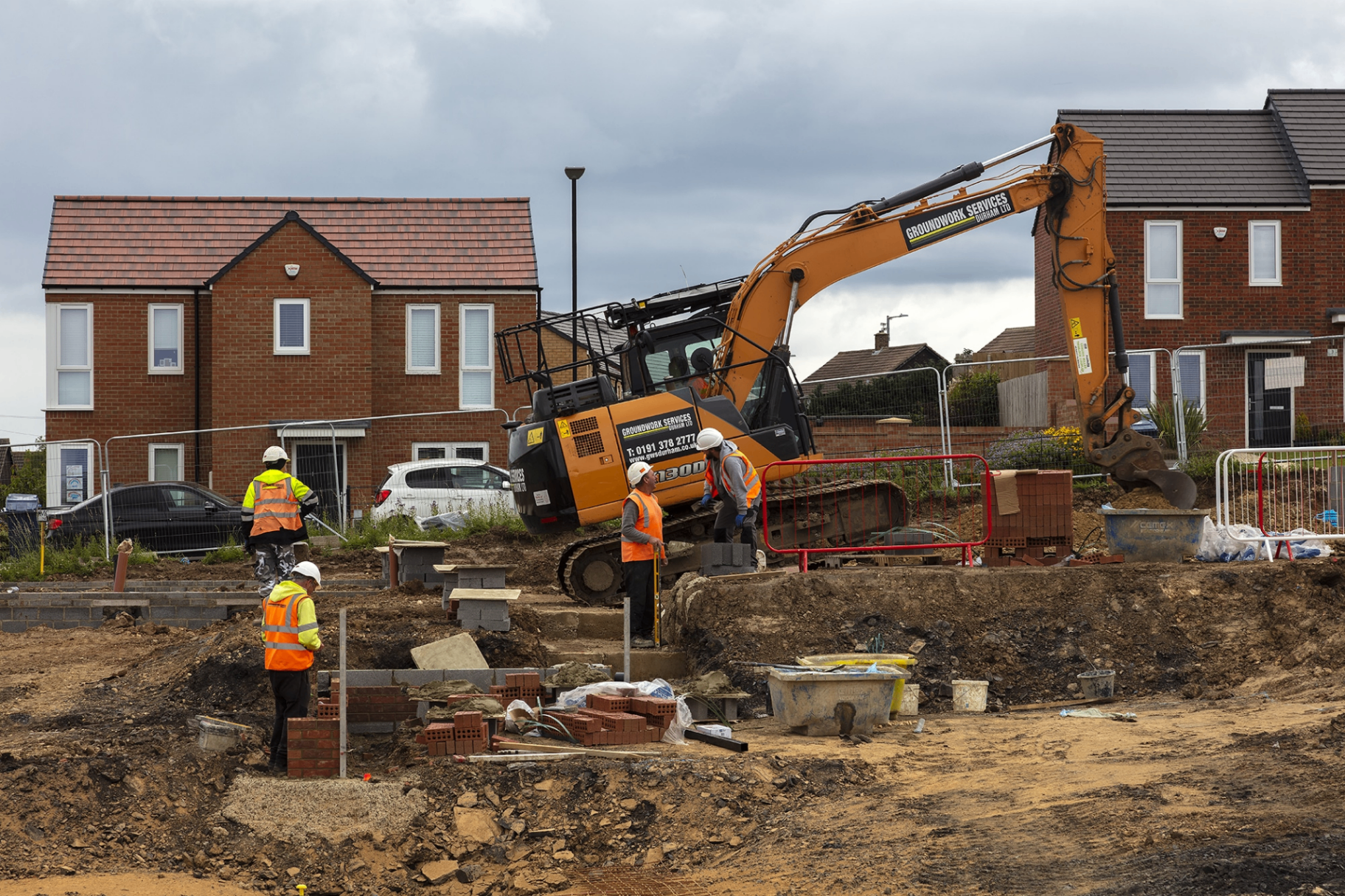
One of Flowcraft's strengths is that our involvement does not have to stop once the problem has been identified. We combine drainage investigation and consultancy with practical groundworks experience.
Where remedial construction is required, Flowcraft can undertake the excavation, drainage installation and associated groundworks necessary to implement the solution. This provides continuity from:
For the client, this means the contractor investigating the drainage problem also understands the practical implications of constructing the proposed solution.
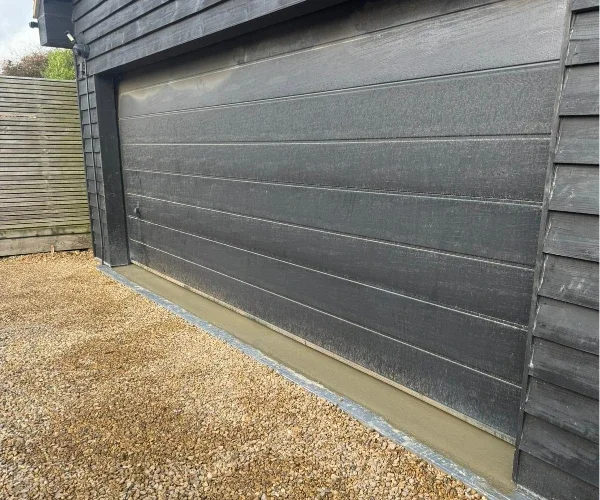
Drainage Problems Often Have More Than One Cause
Real drainage systems do not always have one simple fault. A property might have an ageing soakaway combined with partially obstructed pipework. A garden may have poor infiltration but also receive runoff from higher surrounding ground. A driveway might have adequate drainage infrastructure but incorrect levels directing too much water towards one collection point.
Properties are also changed over time. Extensions are constructed, patios enlarged, driveways replaced, gardens landscaped and roof drainage altered. Each change can affect how rainfall moves around the site and how much water eventually enters the drainage system.
Understanding the property as a complete drainage system is often more useful than treating the location where the water happens to appear.
Preparing For Autumn & Winter Rainfall
Drainage problems frequently become apparent during periods of sustained or intense rainfall. A drainage system that appears to operate normally during light rainfall may begin backing up when the ground becomes saturated or when a large volume of water reaches the system within a short period.
If a property regularly experiences standing water, overflowing drains or localised flooding during wet weather, investigating the problem before the most severe autumn and winter rainfall can provide an opportunity to identify the cause and plan appropriate remedial works.
What Surface Water Really Looks Like
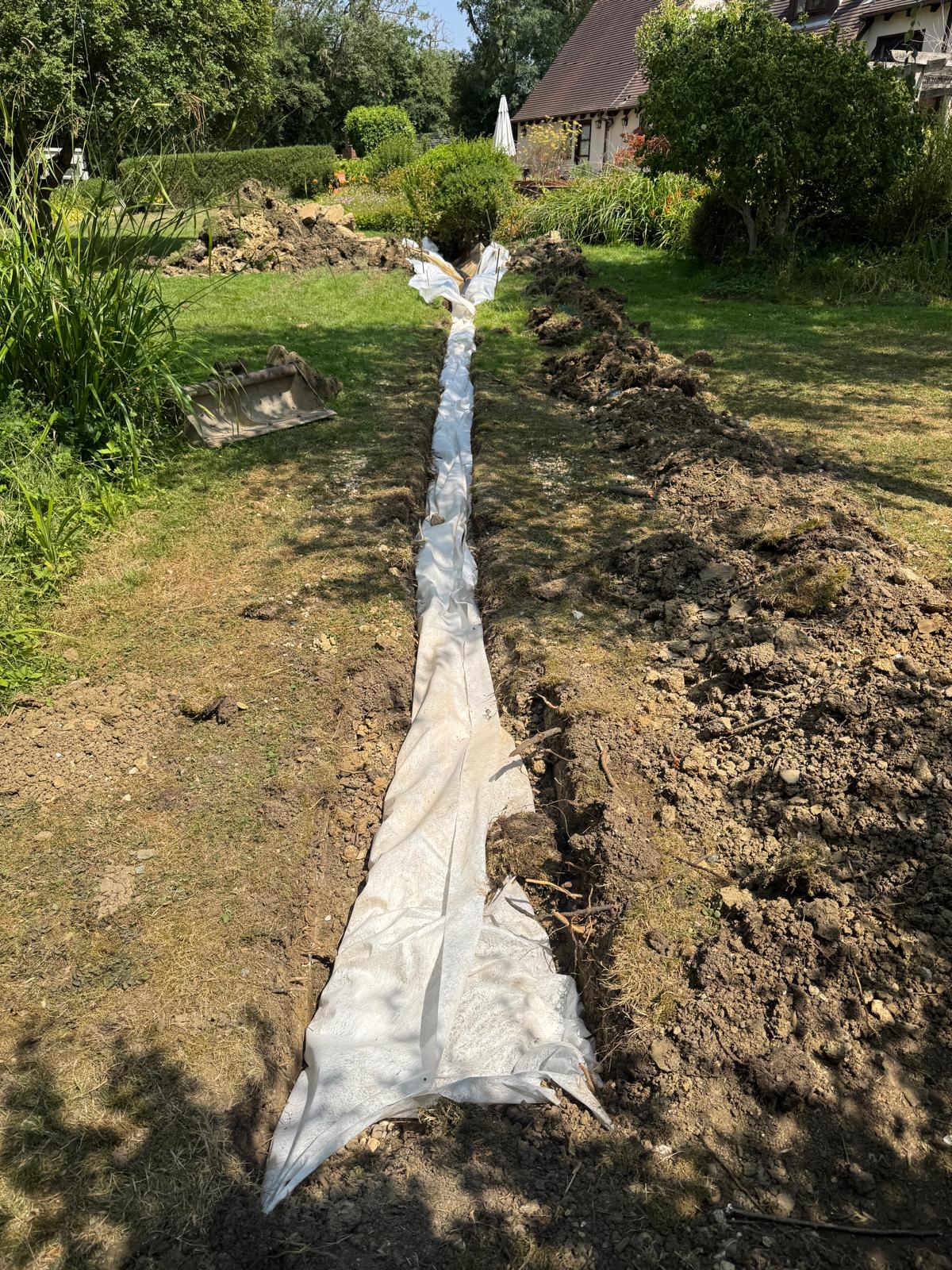
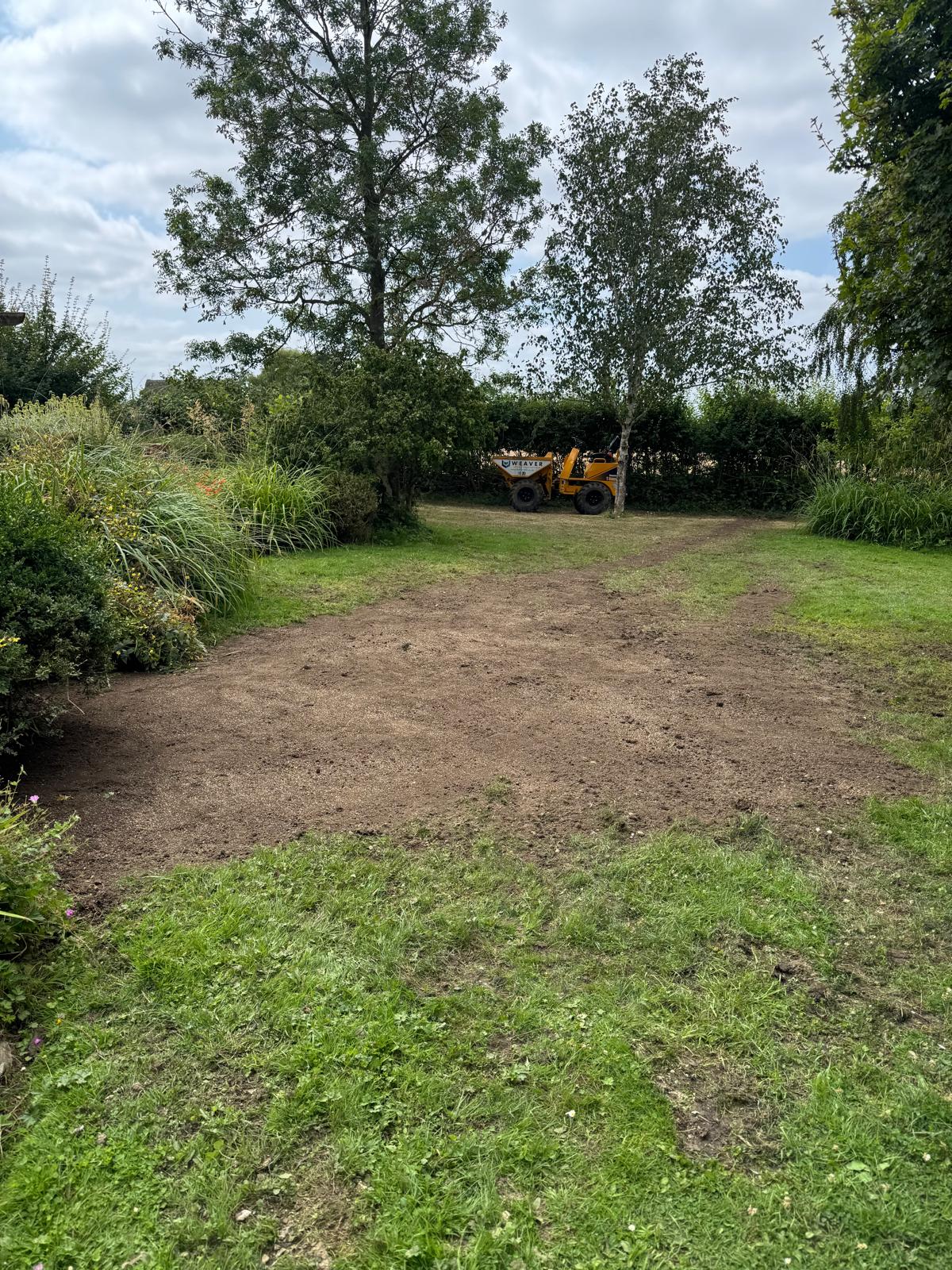
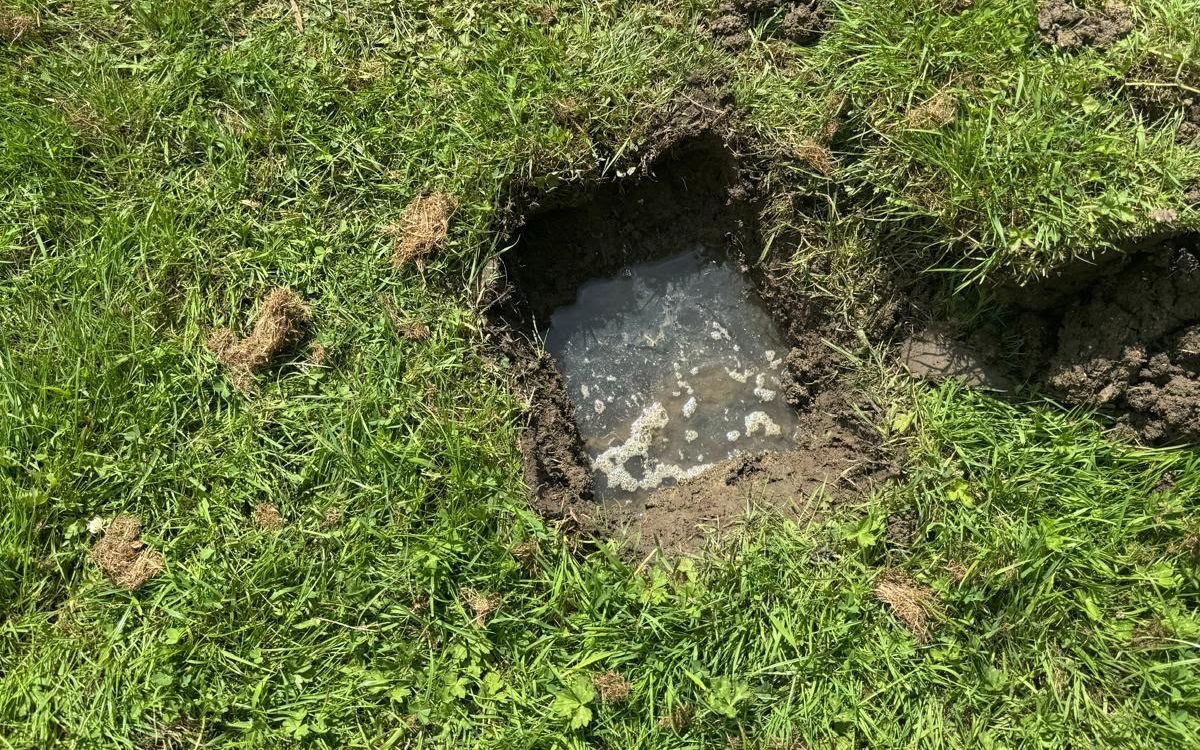
Footage and photographs from a waterlogged garden near Baldock — a property where standing water persisted through roughly 50 days of drought.
Flooding Case Studies
Investigation-led drainage in practice — real flooding problems across Hertfordshire, diagnosed and resolved by Flowcraft.
A Garden Still Waterlogged After 50 Days Of Drought
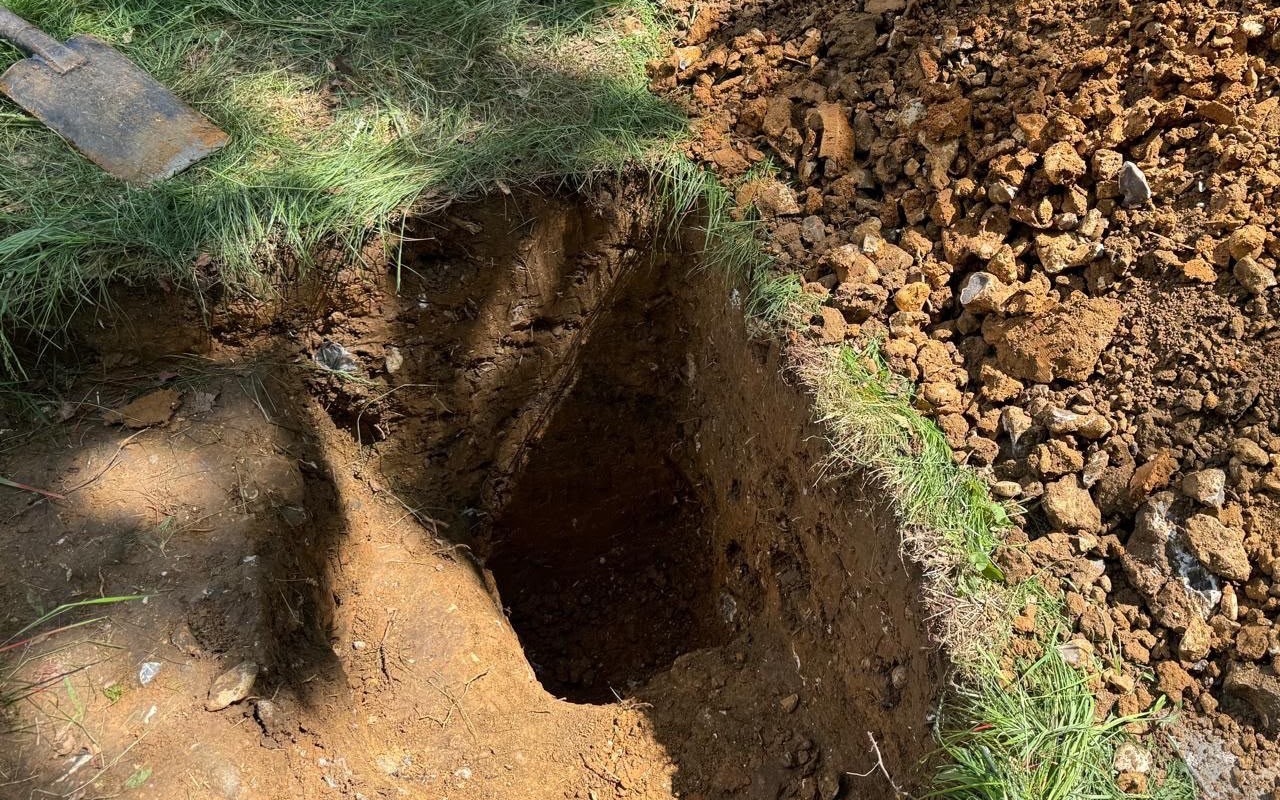
Standing water and a squelching, saturated lawn in the middle of a heatwave pointed to something other than rainfall. Investigation uncovered a burst water pipe beneath the patio and a failed hardcore soakaway — two separate faults compounding each other.
Read the full case study Drainage · HertfordshireResolving Decade-Long Basement Flooding
A wine cellar beneath a double garage had flooded for over ten years despite multiple contractors' attempts. Investigation traced the ingress to ground sloping towards the building — resolved with regraded levels, damp-proofing and an ACO drain across the garage front.
Read the full case studySurface Water & Flooding Investigations Across Hertfordshire
Flowcraft Groundworks Ltd provides drainage investigation, surface water drainage and specialist groundworks services across Hertfordshire and surrounding areas. Based in Hertfordshire, we work across areas including Hemel Hempstead, Berkhamsted, Tring, St Albans and surrounding towns and villages.
Our work ranges from relatively straightforward drainage defects through to complex sites requiring investigation, testing and substantial new drainage infrastructure.
Related Guidance
Homeowner guides on garden flooding, overflowing soakaways and soakaway testing.
Speak To Flowcraft About A
Flooding Or Drainage Problem
If your garden, driveway or property floods during heavy rainfall, the first step is understanding why. We can investigate the affected area, existing drainage, site levels, discharge points and surrounding conditions to establish the likely cause — and where new drainage is required, undertake the groundworks and installation necessary to create an appropriate long-term solution.
Call, WhatsApp or email anytime