
Percolation &
Infiltration Testing
Ground infiltration testing for soakaways, surface water drainage and drainage fields across Hertfordshire and surrounding areas.
Will the Ground Actually Take the Water?
Before designing a soakaway, infiltration system or drainage field, one fundamental question needs answering:
How effectively can the ground accept water?
Ground that appears dry, sandy or free-draining at the surface does not necessarily provide suitable infiltration at the depth where a drainage system will operate. Likewise, clay or apparently difficult ground does not tell us everything about the underlying geology without investigation.
Flowcraft Groundworks carries out practical ground investigation, percolation and infiltration testing to establish how water behaves below ground and provide useful information for the design of an appropriate drainage solution.
Test the Ground.
Then Design the Drainage.
Percolation Test or Infiltration Test — What's the Difference?
The terms are often used interchangeably. However, they can describe different tests depending on what is being designed.
Surface Water
Surface Water Soakaways
- Where rainwater is intended to discharge into the ground through a soakaway or other infiltration system, testing establishes the infiltration characteristics of the ground.
- For soakaway design, testing may be undertaken in accordance with BRE Digest 365, where appropriate.
- Results help determine whether infiltration is feasible and provide the information required to design the proposed soakaway.
Wastewater
Wastewater Drainage Fields
- A percolation test is also used when assessing ground for a drainage field receiving treated effluent from a septic tank or sewage treatment plant.
- This is a different application with its own requirements and assessment method.
- The correct test depends on what the ground is being asked to receive.
Flowcraft can establish what investigation is appropriate for the proposed drainage system rather than simply carrying out a generic “percolation test”.
Why Is Infiltration Testing Important?
A soakaway doesn't make water disappear.
It temporarily stores incoming surface water while allowing that water to infiltrate into the surrounding ground. Its performance therefore depends heavily on the infiltration characteristics of the soil and geology around it.
If the ground accepts water quickly, an appropriately designed infiltration system may be highly effective. If infiltration is slow, significantly more storage may be required — or a conventional soakaway may not be suitable at all.
Installing a soakaway without understanding the ground can result in:
- Rainwater drainage backing up
- Gullies overflowing
- Standing water
- Localised flooding
- A soakaway remaining full between rainfall events
- An unnecessarily large or expensive installation
- A system that cannot perform as intended
The size of the hole is only part of the equation.
The ground surrounding it determines how quickly the stored water can get away.
When Might You Need an Infiltration Test?
Planning a New Soakaway
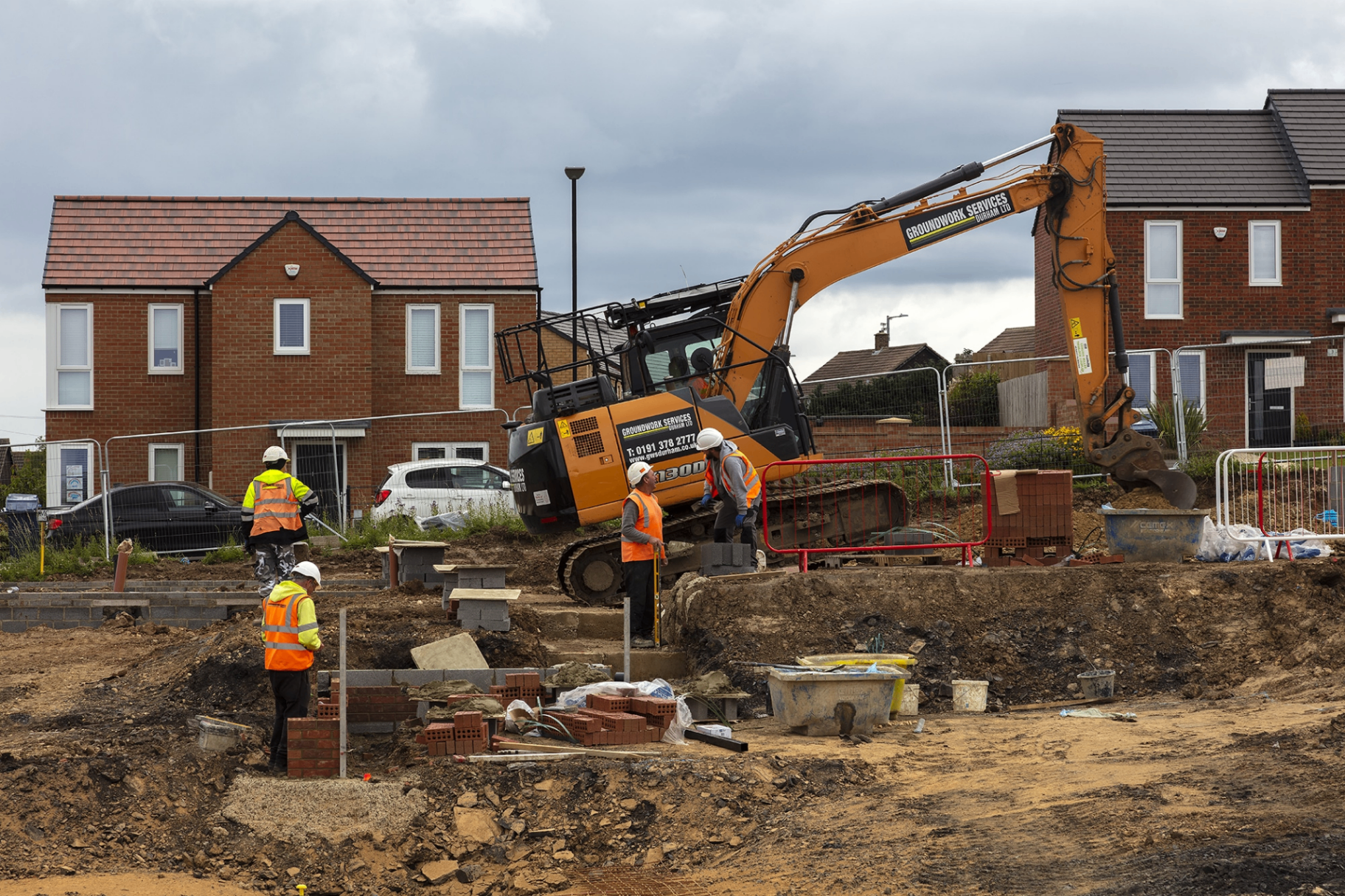
A new extension, dwelling, outbuilding, driveway or development may create additional surface water that needs to be managed.
Replacing a Failed Soakaway
If an existing soakaway no longer functions correctly, simply replacing it without understanding the ground risks reproducing the same problem.
Investigating Garden or Surface Water Flooding
Where standing water or repeated flooding is suspected to involve poor ground infiltration, testing can help establish whether infiltration drainage is realistic.
Designing Surface Water Drainage
Ground infiltration information can form an important part of developing a suitable drainage strategy.
Supporting Planning or Building Control
Site-specific infiltration information may be required to demonstrate the feasibility or design basis of a proposed drainage system.
Assessing a Drainage Field
Where treated wastewater is proposed to discharge through a drainage field, appropriate ground assessment and percolation testing may be required.
How Does a Soakaway Infiltration Test Work?
For surface water soakaways, the objective is not simply to see whether water disappears into a small hole. A representative test needs to assess how water drains through the ground at the depth and location relevant to the proposed infiltration system.
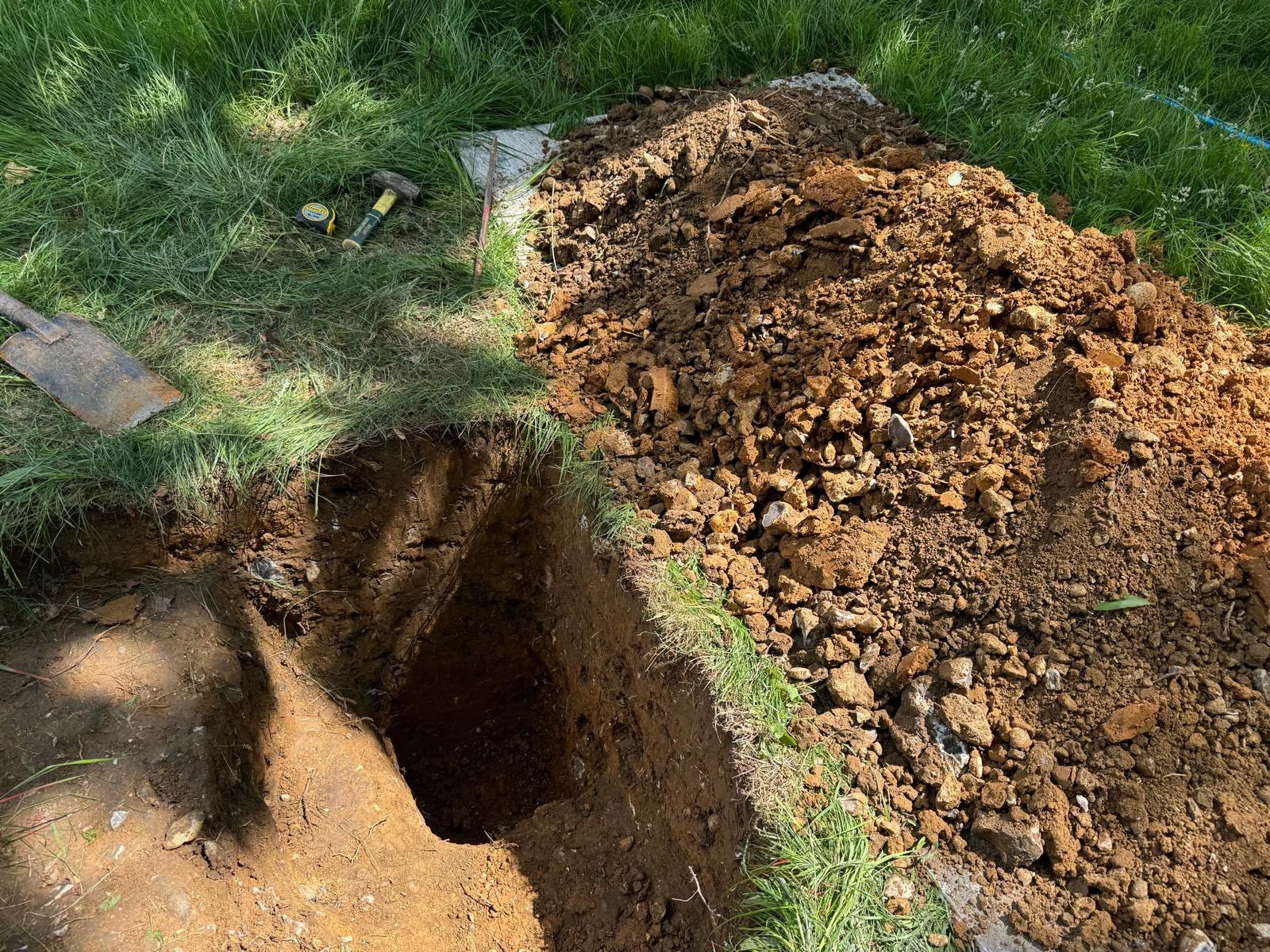
Where appropriate, Flowcraft can excavate a trial pit within the proposed soakaway area and undertake testing based on the principles of BRE Digest 365.
Site Assessment
Before excavation, we consider the proposed drainage arrangement, available space, likely catchment area, site levels, existing drainage and potential constraints.
Trial Pit Excavation
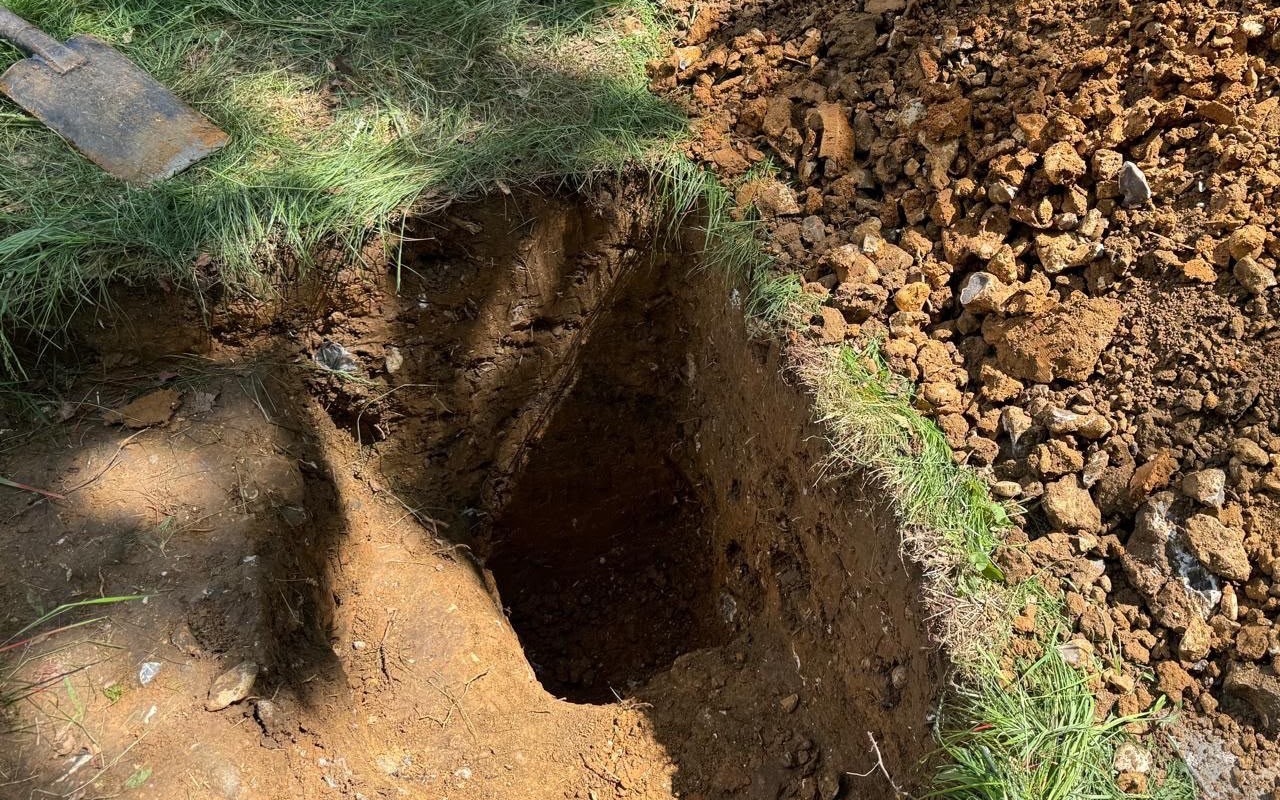
A test pit is excavated within or close to the proposed soakaway location so that the actual ground at the intended infiltration depth can be assessed.
Ground Inspection
Excavation provides an opportunity to observe the soil profile and identify changes in ground conditions that would not be apparent from the surface.
Pre-Soaking Where Appropriate
Ground conditions may require preparation or pre-soaking before formal testing to help produce a representative assessment.
Controlled Filling
The test excavation is filled with water to the required level.
Monitoring the Drawdown
The fall in water level is measured over time, allowing the rate at which water infiltrates into the surrounding ground to be assessed.
Repeated Testing
Where required by the applicable methodology, testing is repeated to obtain representative results rather than relying on a single fill.
Results & Reporting
The recorded information is used to calculate infiltration characteristics and inform the feasibility and design of the proposed soakaway.
Not sure why testing is required? Read our guide: What Is a BRE 365 Soakaway Test?
Why a Bucket of Water in a Small Hole Isn't Enough
Informal tests can sometimes give a basic indication that ground is either extremely permeable or obviously slow draining. But they are not a substitute for appropriate infiltration testing where the results are going to be used to design a drainage system.
Ground conditions can change considerably with depth. A shallow topsoil layer may drain freely while impermeable clay exists beneath it. Conversely, difficult shallow material may overlie more suitable geology.
The location, depth, dimensions and preparation of a test can all influence the result.
A representative test needs to investigate the ground where the drainage system will actually operate.
What Does the Infiltration Rate Tell Us?
The test result provides information about how readily water can pass into the surrounding ground. That information can then be considered alongside factors including:
- Roof and paved catchment area
- Design rainfall
- Proposed soakaway dimensions
- Available land
- Depth of suitable ground
- Site levels
- Existing drainage
- Groundwater
- Nearby structures
- Site boundaries
- Other drainage constraints
This is why an infiltration test should not simply produce a number without context. The useful question isn't only “What is the infiltration rate?”
It is:
What does that result mean for the drainage we are trying to build?
What If the Ground Doesn't Drain?
A poor infiltration result is still a useful result.
It can prevent money being spent constructing a soakaway that was unlikely to work.
If testing indicates that infiltration is unsuitable or severely restricted, the next stage is to consider what other surface water management options may be available. Depending on the property and site constraints, these could include:
- Rainwater reuse
- Attenuation and controlled discharge
- Alternative infiltration locations
- Shallow infiltration systems where appropriate
- Surface water discharge to an appropriate watercourse
- Connection to suitable surface water drainage where permitted
- A combined drainage strategy
The appropriate solution depends on the individual site and any necessary permissions.
A failed test doesn't mean the investigation failed.
It means we now know not to design the drainage around an assumption that isn't supported by the ground.
Ground Conditions Can Vary Across One Property
One of the most important considerations when assessing infiltration is that ground conditions are not necessarily uniform. A property can contain:
And those materials may occur at different depths across relatively short distances.
A previous soakaway elsewhere on a property — or even a neighbouring property — does not automatically prove that another location will perform in the same way.
Site-specific testing provides site-specific evidence.
Failed Soakaway? Test Before Replacing It
If an existing soakaway is overflowing or no longer emptying correctly, the first step should normally be understanding why it has failed. The problem may involve:
- Blocked incoming drainage
- Siltation
- Root ingress
- Structural deterioration
- Increased surface water entering the system
- Insufficient storage capacity
- Poor infiltration
- Saturated ground
- Several faults occurring together
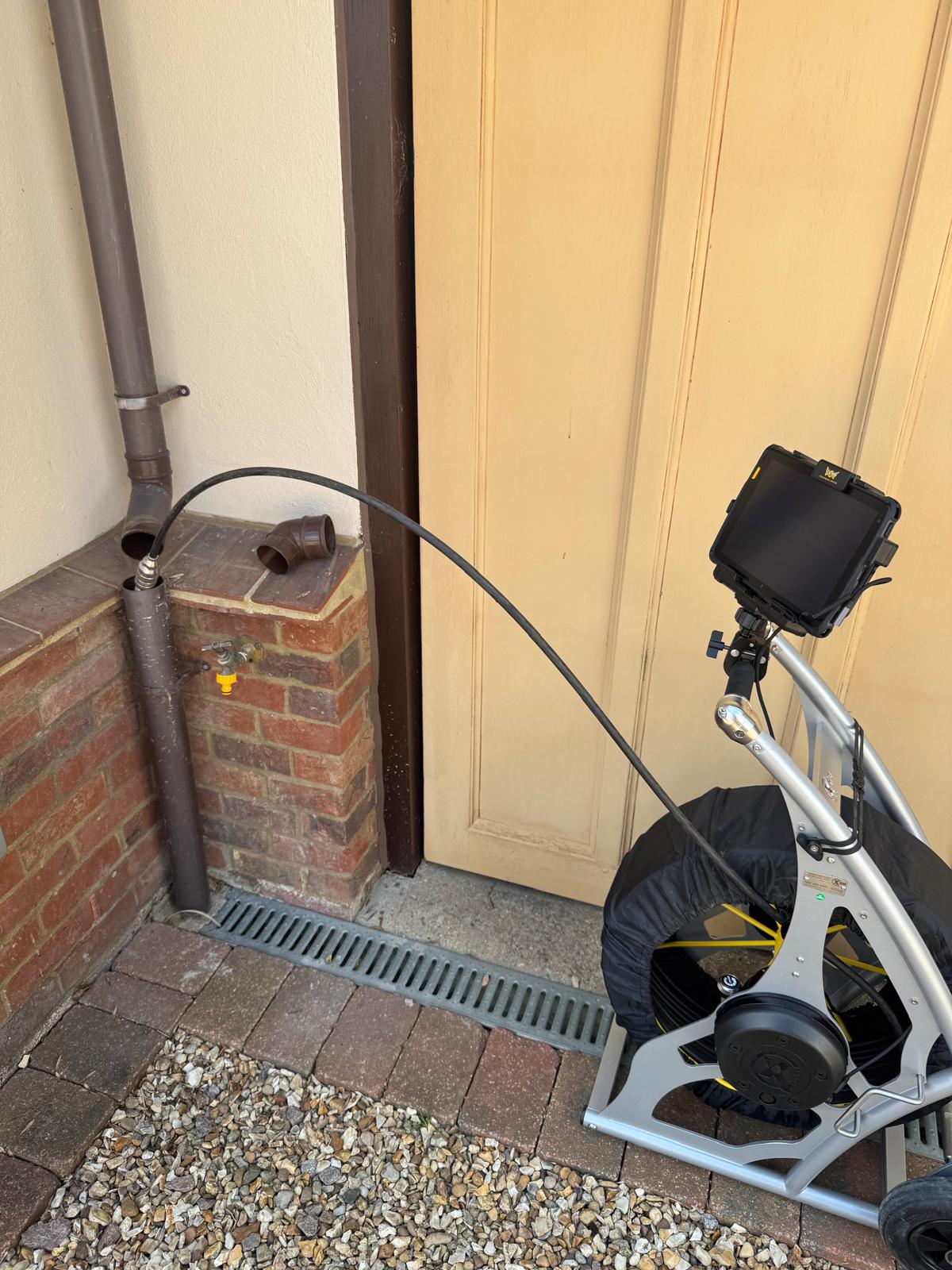
Flowcraft can investigate the existing drainage system before deciding whether replacement is actually necessary.
Where a replacement soakaway is proposed, infiltration testing can then help establish whether the ground is suitable and provide information for the new drainage design.
Investigate the failure. Test the ground.
Then design the replacement.
Percolation Testing for Septic Tanks & Drainage Fields
Surface water soakaways and wastewater drainage fields should not be treated as the same thing.
Where treated wastewater is proposed to discharge to ground through a drainage field, the suitability of the ground needs to be assessed for that particular application.
A percolation test can be used to establish the drainage characteristics of the soil and calculate a percolation value used in drainage-field assessment and sizing. Groundwater conditions, available area, site constraints and the requirements applicable to wastewater discharge also need to be considered.
Planning effluent disposal to ground? Our drainage field guide explains how testing fits into the wider site assessment.
Flowcraft's experience with septic tanks, sewage treatment plants, drainage fields and groundworks means the ground assessment can be considered as part of the wider wastewater system rather than as an isolated test.
From Trial Pit to Drainage Construction
Flowcraft Groundworks combines practical ground investigation with drainage construction.
Where required, we can provide continuity through:
This means the information gained during excavation and testing can be considered directly when developing the practical drainage solution.
We are not simply interested in whether the water level drops. We want to understand:
What ground have we encountered?
How does it behave?
Is infiltration appropriate?
What does that mean for the drainage system?
Percolation & Infiltration Testing Across Hertfordshire
Flowcraft Groundworks provides percolation testing, infiltration testing and soakaway investigations throughout Hertfordshire and surrounding areas, including:
We also undertake suitable projects across surrounding areas of Buckinghamshire and Bedfordshire.
Services are available for homeowners, builders, architects, developers and other professionals requiring practical ground infiltration information.
Related Guidance
Guides on what a BRE 365 test involves, what to do after a poor result and why an existing soakaway may overflow.
Do You Need a Percolation
Or Infiltration Test?
Whether you're planning a new soakaway, replacing a failed drainage system, investigating surface water problems or assessing ground for a drainage field, the first step is establishing what test is actually required and what information the drainage design needs.
Don't design the soakaway around an assumption. Test the ground first.
Call, WhatsApp or email anytime