
What Is a BRE 365
Soakaway Test?
Measuring how quickly water infiltrates into the ground, so a soakaway can be designed on evidence rather than assumption.
- Author
- Jamie Hopcraft, Flowcraft Groundworks Ltd
- Category
- Soakaways & Surface Water
- Published
- Published
A BRE 365 soakaway test measures how quickly clean water can infiltrate into the ground at a proposed development or drainage location.
The results help establish whether infiltration drainage is viable and provide the site-specific infiltration rate required to design a surface-water soakaway correctly. It is one of the percolation and infiltration testing services Flowcraft provides across Hertfordshire.
It is commonly required for:
- New-build developments
- Property extensions
- Replacement or enlarged soakaways
- New driveways and areas of hardstanding
- Planning applications and drainage conditions
- Sustainable drainage systems (SuDS)
- Sites where an existing soakaway has failed or its performance is uncertain
Where an existing soakaway has failed or is performing unpredictably, a soakaway investigation should establish why before a replacement is designed — the problem is not always the ground.
A BRE 365 test should be completed before the size, depth and position of a new soakaway are finalised. Without suitable testing, a soakaway may be installed in ground that cannot accept the expected volume of water.
What Does a BRE 365 Test Establish?
A BRE 365 test investigates the infiltration characteristics of the ground at the depth and location of the proposed soakaway. It helps answer three important questions:
Can surface water infiltrate into the ground at this location?
How quickly does the water drain away?
What infiltration rate should be used when designing the soakaway?
The test result does not simply provide a pass or fail. It produces an infiltration rate that can be used alongside the proposed drained area, local rainfall data, design storm events and other site constraints.
Slower infiltration does not always make a soakaway impossible, but it may require a larger system or a different drainage approach. Ground that accepts water very slowly — or not at all — may be unsuitable for conventional infiltration drainage.
Why Is BRE 365 Testing Important?
A soakaway temporarily stores rainwater and allows it to disperse gradually into the surrounding ground. Its performance therefore depends on the ground being sufficiently permeable.
Installing soakaway crates does not make impermeable soil drain: the crates only create temporary storage space.
If the infiltration rate is assumed rather than tested, the finished system could:
- Remain full between rainfall events
- Back up into gutters or surface-water pipes
- Cause standing water or localised flooding
- Saturate the surrounding ground
- Affect nearby buildings, gardens or retaining structures
- Fail to satisfy Planning or Building Control requirements
These are the same symptoms we see in many of our garden flooding and surface-water drainage investigations — and in a surprising number of them, the soakaway was built without the ground ever being tested.
Testing before construction reduces the risk of designing and installing a drainage system that cannot work under the actual site conditions.
How Is a BRE 365 Soakaway Test Carried Out?
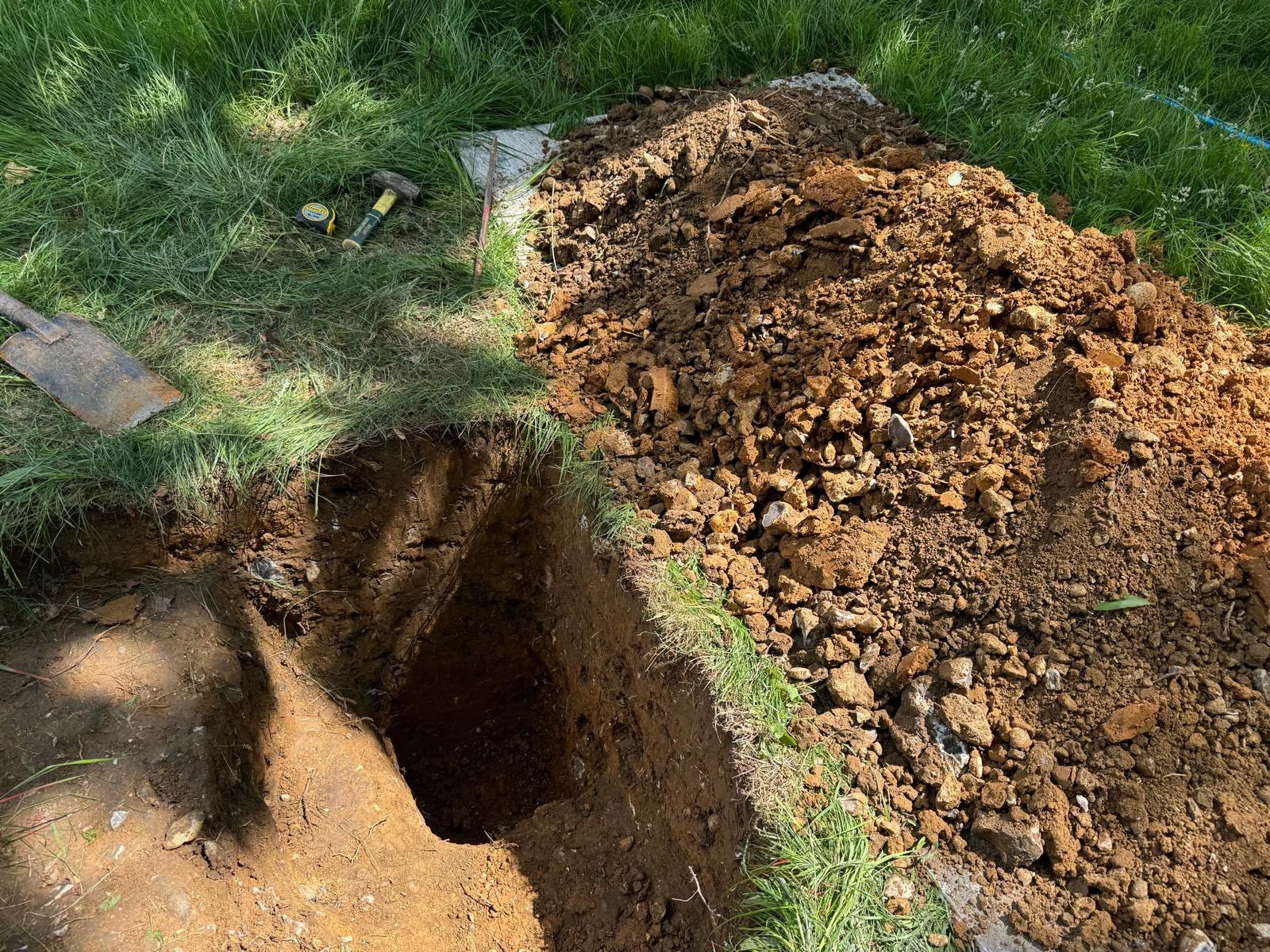
A trial pit is excavated in the proposed soakaway location and, as far as reasonably practicable, to the intended depth of the finished infiltration system. The test generally involves:
Selecting the test location
The pit should represent the ground in which the proposed soakaway will be constructed. Testing elsewhere on the site may not accurately represent the proposed location.
Excavating the trial pit
The pit is formed to suitable dimensions with its sides and base recorded. The soil and ground conditions encountered during excavation are also noted.
Filling the pit with clean water
A substantial volume of water may be required. The pit must be filled sufficiently quickly to establish the effective test depth without gradually pre-soaking the ground during filling.
Monitoring the falling water level
Water levels are recorded against time as the pit drains. These measurements show how quickly water infiltrates through the exposed base and sides of the trial pit.
Repeating the test
BRE 365 testing normally requires three consecutive fillings. Repeating the test is important because dry ground can initially accept water faster than it will once the surrounding soil has become wetted.
Calculating the infiltration rate
The recorded dimensions, water levels and drainage times are used to calculate a soil infiltration rate for the tested location.
Depending on the ground conditions, each filling may drain relatively quickly or may require extended monitoring. Where the water level does not fall sufficiently, it may not be possible to calculate a valid infiltration rate.
Why Does the Test Need to Be Repeated?
The first filling can sometimes produce an unrealistically favourable result, particularly where the surrounding ground is initially dry.
As the test is repeated, the soil becomes wetter and its behaviour may change. The later tests can therefore provide a better indication of how the ground will perform during successive or prolonged rainfall.
A single fill, a bucket test or simply observing that water disappears from a hole is not equivalent to a completed BRE 365 infiltration test.
What Happens After the Test?
The findings should be recorded in a clear report containing the relevant site information, test-pit details, observations, measurements and calculated results.
The infiltration rate can then be used to inform the drainage design. The final soakaway size will also depend on factors including:
- The roof or paved area being drained
- The design rainfall event
- The proposed soakaway dimensions and effective storage
- The depth and characteristics of the receiving ground
- Groundwater conditions
- Proximity to buildings, boundaries and other structures
- Existing services and drainage systems
- Site levels and the consequences of an overflow
- Planning, Building Control and local drainage requirements
A successful test does not mean that a standard quantity of soakaway crates can automatically be installed. The system must still be designed for the amount of runoff it will receive.
What If the Ground Fails the Test?
An unsuccessful result is still valuable.
It prevents money being spent on a soakaway that is unlikely to perform and provides evidence that another method of surface-water management may need to be considered.
Depending on the site, the next stage could include:
- Testing another representative location or depth
- Reviewing whether a shallow or distributed infiltration system is appropriate
- Considering attenuation with a controlled discharge
- Investigating an appropriate watercourse or surface-water sewer connection
- Reducing or managing runoff through a wider SuDS strategy
- Preparing evidence to support an alternative drainage proposal
The correct solution depends on the site. A soakaway should not be recommended simply because it is the easiest system to install.
Where infiltration is unsuitable, our drainage investigation and consultancy service can assess which of the alternatives genuinely suits the site and what evidence Planning or Building Control will expect to see.
Received a poor result? Read what happens after an unsuccessful soakaway test.
Is a BRE 365 Test the Same as a Percolation Test?
The terms are often used interchangeably, but the purpose and testing standards are different.
Surface Water
BRE 365 Infiltration / Soakaway Test
Used primarily for clean surface water from roofs, driveways and other impermeable areas. Its results inform the feasibility and design of surface-water infiltration systems.
Foul Water
Foul-Water Percolation Test
Used to assess ground intended for a drainage field serving a septic tank or sewage treatment plant. Generally undertaken in accordance with Approved Document H and BS 6297, producing a percolation value commonly expressed as Vp.
Using the wrong test can produce information that is unsuitable for the proposed drainage design. It is therefore important to establish whether the project concerns clean surface water or treated foul effluent before testing begins.
Read more about percolation & infiltration testing or see our septic tank and sewage treatment plant services.
When Should Testing Be Arranged?
Testing should ideally be undertaken early — before the drainage layout is fixed and before construction reaches the stage where changing the design becomes expensive.
Early testing allows the architect, drainage designer or property owner to understand:
- Whether infiltration is likely to be viable
- How much space a soakaway may require
- Whether the proposed location is suitable
- Whether an alternative discharge strategy needs to be investigated
- Whether further site investigation is required
Leaving testing until after planning, excavation or construction has begun can lead to redesign, delays and additional cost.
BRE 365 Testing in Hertfordshire
Flowcraft provides practical soakaway investigation and infiltration testing across Hertfordshire and surrounding areas, including Hemel Hempstead, Berkhamsted, Tring and St Albans.
We assess the proposed drainage requirements, site access, likely ground conditions and testing logistics before attending. Where testing is appropriate, we can arrange the excavation, water supply, monitoring and reporting required for the investigation.
Our approach is straightforward: investigate the ground first, establish what is likely to work and then make recommendations based on the evidence.
Related Services
If this guide has answered the question you came with, these are the services it leads to.
Related Guidance
Real investigations from the Flowcraft Knowledge Centre.
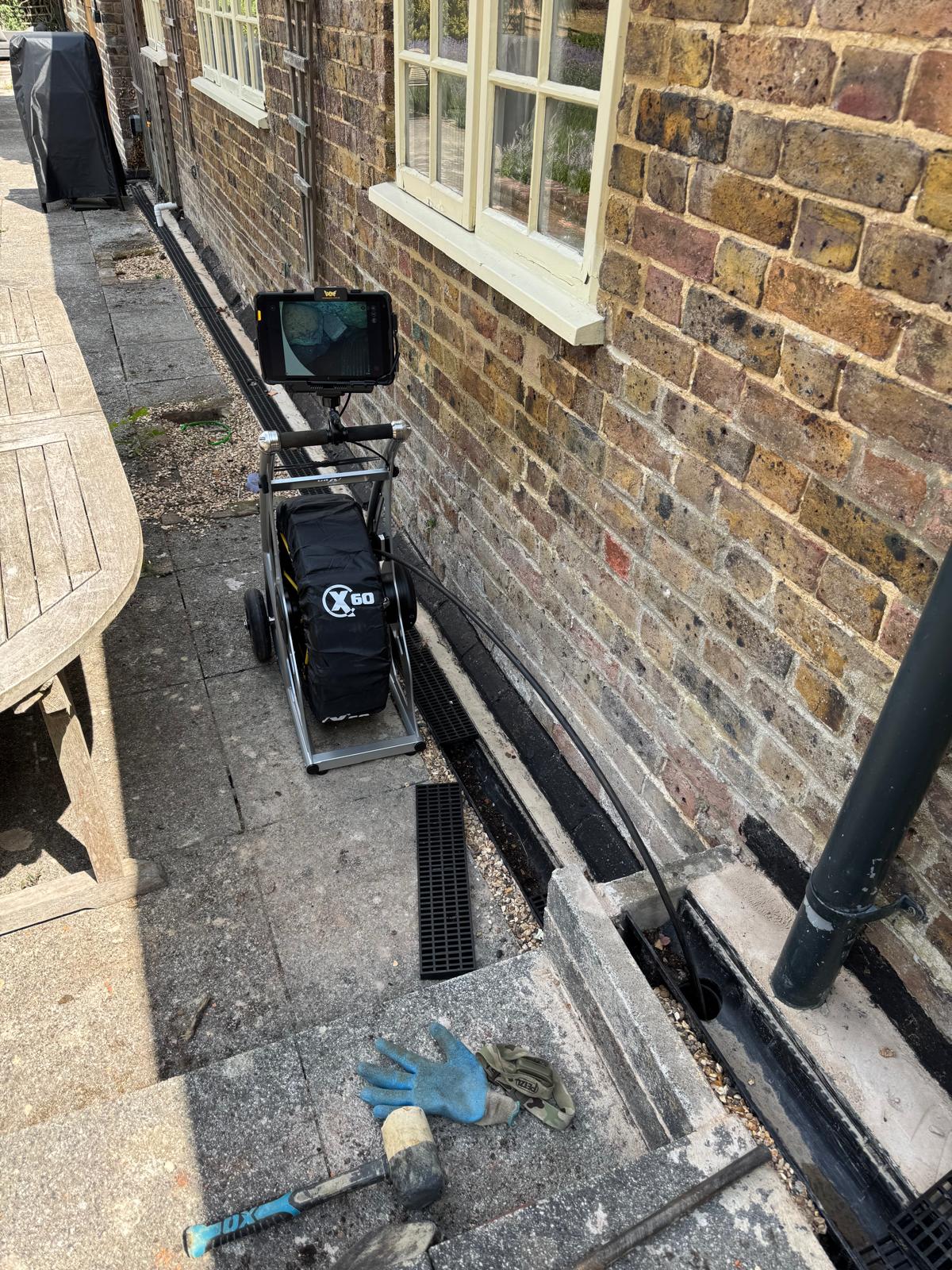
Does a Level 3 Home Survey Include a Drainage Survey?
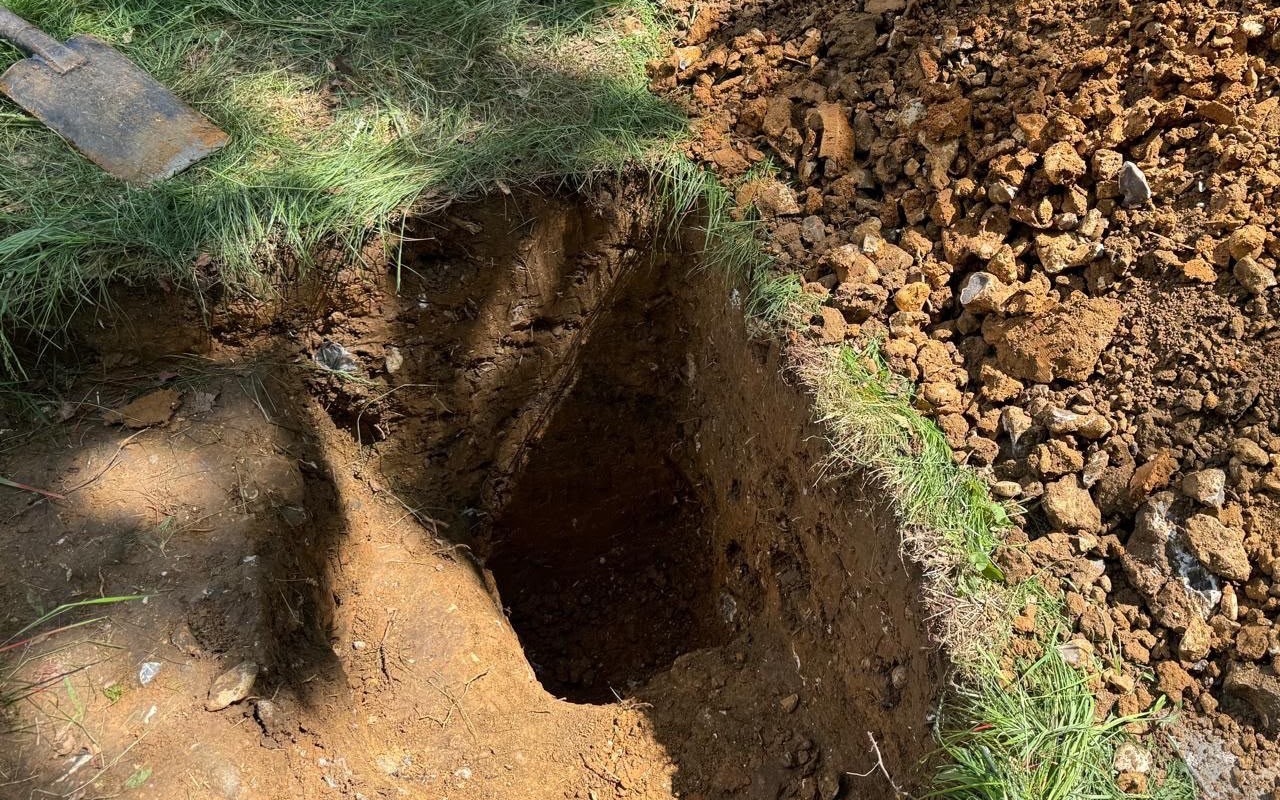
What Happens If Your Site Fails a Soakaway Test?
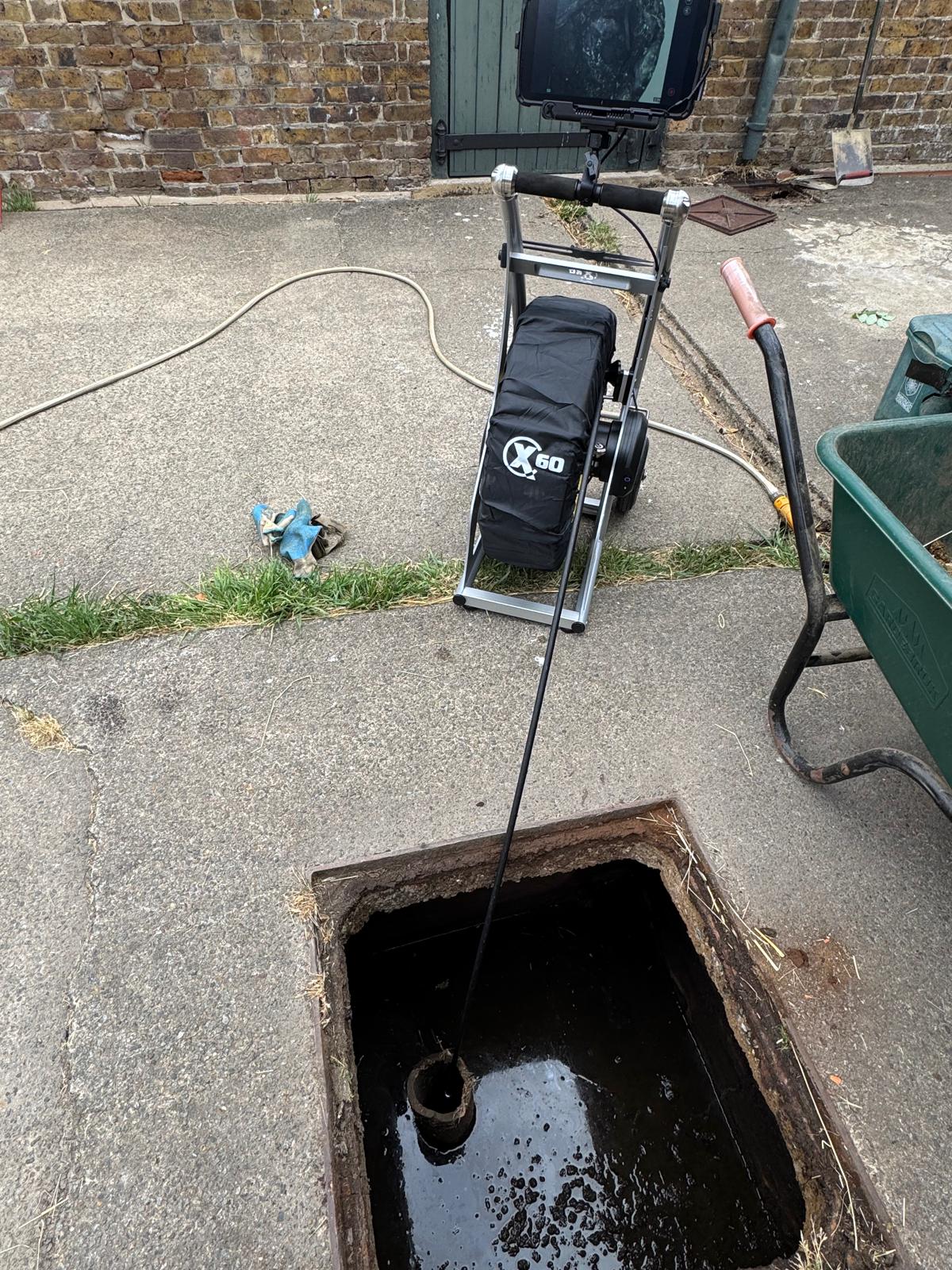
How Do You Find Out Where Underground Drains Run?
About the author
Jamie Hopcraft
Jamie Hopcraft is the director of Flowcraft Groundworks Ltd and has more than 20 years of practical experience in drainage, groundworks and below-ground investigations.
Arrange a BRE 365
Soakaway Test
If you have been asked by an architect, planning consultant, Building Control officer or drainage designer to arrange a BRE 365 soakaway test, send us the site address and any available plans or drainage requirements.
We can review the information, explain what testing is required and provide a clear quotation for the investigation.