
- Author
- Jamie Hopcraft, Flowcraft Groundworks Ltd
- Category
- Private Drainage & Wastewater
- Published
- Published
A drainage field is a system that distributes effluent from a septic tank or sewage treatment plant into suitable soil through a network of underground drainage trenches. The soil provides further treatment as the liquid moves through it. The field needs enough suitable ground, an appropriate loading rate and protection from waterlogging. [1, 2]
It is part of the wastewater treatment and discharge system, not simply a place to hide unwanted water. This guide explains its purpose, how it differs from other drains and what should be checked when it is failing or a property is being sold. Regulatory references apply to England.
How does a drainage field work?
Effluent leaves the tank or treatment plant and enters the distribution system. In a conventional drainage field, perforated pipes spread it along shallow trenches containing suitable drainage material. The liquid then moves into the surrounding soil, where physical and biological processes provide further treatment. [2, 3]
The aim is to distribute a manageable load through an adequate area of unsaturated soil. A single deep hole is a different arrangement. Sending water straight to a more permeable layer can bypass the ground needed for treatment and increase the risk to groundwater. [3]
The incoming flow, pipe layout, soil and seasonal groundwater conditions all matter. A large tank connected to a small or unsuitable field does not make the complete system adequate.
How is it different from a soakaway or land drain?
| Arrangement | Main purpose | Why the distinction matters |
|---|---|---|
| Wastewater drainage field | Disperses septic-tank or treatment-plant effluent through suitable soil. | The receiving soil forms part of the treatment and pollution-control arrangement. |
| Rainwater soakaway | Stores runoff and lets it infiltrate into the ground. | Rainwater crates or a rubble pit are not a substitute for a wastewater drainage field. |
| Land drain or French drain | Collects water from wet ground and conveys it towards an outlet. | Connecting effluent to it may carry sewage pollution away from the intended treatment area. |
“Septic tank soakaway”, “soakaway field”, “leach field” and “drain field” are sometimes used for wastewater drainage fields. Establish the construction and destination rather than relying on the name. An old description on a plan does not tell you whether it is a network of trenches, a pit, a borehole or a pipe to a ditch.
Our French drain guide explains water-collection drainage. Its purpose is different from distributing foul effluent.
Why do ground conditions matter so much?
Very slow-draining ground may be unable to accept the daily wastewater load. Very rapid movement may provide insufficient treatment before the effluent reaches groundwater. Ground that becomes saturated can also lose the unsaturated treatment zone on which the field depends. [3]
A lawn that looks dry during an inspection is not evidence that the ground remains suitable in winter. Review seasonal groundwater, flooding, ground levels and soil conditions at the proposed trench depth. Dry-weather cracks in clay do not establish year-round suitability.
What tests are needed before a new field is designed?
A site assessment should establish the soil profile and groundwater conditions, followed by appropriate foul-water percolation testing in the proposed area. The test produces a percolation value, usually called Vp, expressed in seconds per millimetre. It helps assess suitability and the required infiltration area. [3]
This is different from a BRE 365 test used for surface-water soakaway design. A rainwater infiltration result should not simply be substituted for a foul-water percolation result. Tell the testing contractor which system is proposed; our percolation and infiltration testing service covers these different requirements.
The designer also needs the treatment type, design sewage load, layout constraints, nearby water supplies and any relevant permit conditions. A test result is one design input, not permission to install a field anywhere on the plot.
How much space does a drainage field need?
There is no reliable standard size for every three-bedroom or four-bedroom house. The area depends on the design load, soil test results, treatment provided and the applicable design method. British Water’s sizing guidance helps establish the load; it should reflect the property’s capacity and connected uses rather than only today’s occupants. [4]
The calculated infiltration area is not necessarily the whole land area required. Trenches need spacing, suitable ground around them and separation from other features. A treatment plant may change the design basis compared with a septic tank, but that is not a reason to assume a fixed percentage reduction for every site.
Where can a drainage field be installed?
Approved Document H gives a starting point for conventional drainage-field siting in England: at least 15 metres from a building, 10 metres from a watercourse or permeable drain, and 50 metres from a groundwater abstraction point. It also addresses source protection zones, nearby infiltration systems and keeping roads, driveways and paved areas out of the disposal area. [2]
These distances are not a complete compliance checklist. The relevant standard, groundwater protection requirements, discharge history and any permit conditions must also be checked. Do not transfer a rainwater soakaway’s siting rules to a wastewater drainage field. [1, 3]
Preserve access to the tank, chambers and field. Future extensions, paving and landscaping need to be considered before choosing the location, including where maintenance or replacement could realistically take place.
Can a drainage field work in clay or high groundwater?
Heavy clay and high seasonal groundwater can make a conventional field unsuitable. Adding gravel or more storage does not change the underlying soil’s ability to receive and treat the discharge. A raised drainage mound or engineered arrangement may be considered in some circumstances, but it needs a proper design and the relevant regulatory route. [1, 3]
Environment Agency guidance updated in July 2026 explains when ground engineered to reduce an excessively fast percolation rate can meet the General Binding Rules. This is not blanket approval to excavate clay and replace it with gravel. [1]
There are also specific permit options for certain non-standard arrangements. For example, standard rules permit SR2025 No 6 covers qualifying replacement discharges of up to 1.5 cubic metres a day through a shallow non-standard infiltration system. It has detailed eligibility and operating conditions; it is not a general exemption for drainage tunnels, crates or difficult sites. [6]
What are the signs of a drainage field problem?
- Effluent or sewage odour at the surface around the receiving area.
- Persistent wet patches associated with use of the wastewater system.
- Water backing up towards the tank or inlet drains.
- An outlet pipe or distribution chamber that remains flooded when it should discharge freely.
- Repeated loss of performance after rainfall or during periods of greater household use.
These observations need to be considered together. Water in an outlet pipe may indicate restricted discharge, high receiving levels or an issue with the pipe itself. It should be recorded against the pipe and tank levels and the operating conditions; it does not by itself reveal the whole buried field or identify the precise cause.
Keep people and animals away from effluent at the surface and arrange an investigation. Do not divert the outlet to a ditch or garden drain as a quick fix. Avoid contact with sewage and do not enter tanks or chambers. [8]
Why do drainage fields fail?
Possible causes include unsuitable soil, seasonal saturation, insufficient area, uneven distribution, damaged pipework, compaction or solids escaping from a poorly maintained tank. Extra connected properties, leaking water supplies or rainwater entering foul drains can also increase the load beyond what the field was designed to accept. [1, 3, 4]
Biological growth at the infiltration surface is part of wastewater treatment. Where the load exceeds what the system and soil can manage, the receiving surface can become restricted. The investigation should establish both how much water is arriving and what happens to it after it leaves the tank.
Can a failed field be repaired?
Sometimes the repair concerns an accessible pipe, distribution chamber or upstream treatment fault. In other cases, the soil or receiving area is no longer suitable and a replacement field or different discharge arrangement is needed. Establish the cause before choosing the remedy.
Emptying the tank may temporarily lower the water level, but it does not demonstrate that the field has recovered. Similarly, clearing a pipe does not prove that the surrounding ground can absorb the required flow. A recommendation should explain what has been established, what remains uncertain and the evidence supporting the proposed work.
Where a conventional field is not viable, options may include a public sewer connection, a different suitable infiltration area or a treatment-and-discharge arrangement assessed through the appropriate permitting route. Availability depends on the site; a permit application is not a guarantee of approval. [5]
What should a homebuyer survey establish?
A private drainage and wastewater survey should seek to establish what receives the effluent, where it is located, its accessible condition and whether there are signs of restricted flow or pollution. Plans, installation records, test results, permits and maintenance history can be valuable evidence.
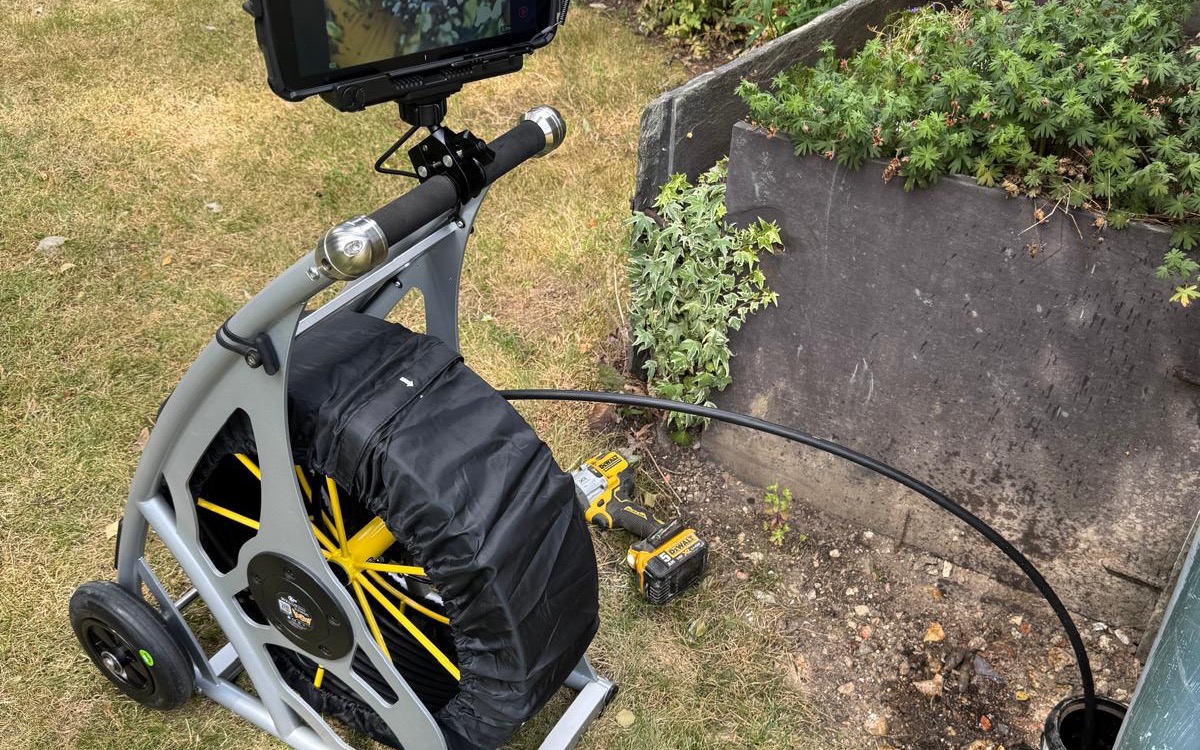
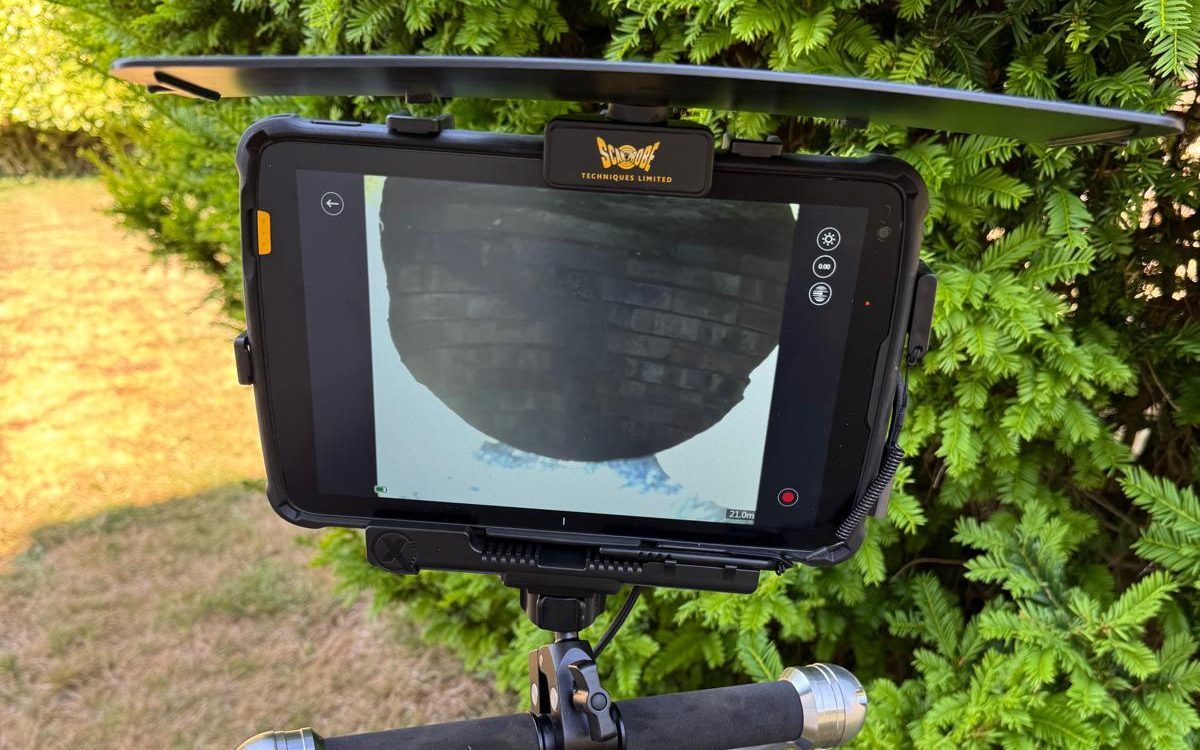
Depending on the agreed scope and access, investigation may include CCTV of suitable pipework, tracing, flow observations and inspection of accessible distribution or sampling chambers. Excavation and new soil testing are separate tasks where needed. A camera cannot confirm every trench, the entire soil profile or year-round performance.
Where the necessary evidence is available, Flowcraft can confirm compliance with the applicable requirements within the agreed assessment scope. Where information is missing, the report explains what remains unconfirmed and how it can be resolved. For a purchase, ask for this assessment early enough for the solicitor to review the findings before exchange.
Frequently asked questions
Is a drainage field the same as a septic tank soakaway?
It may be what somebody means by that phrase, but not always. Ask whether it is a designed network of effluent distribution trenches or another arrangement such as a pit or borehole. The label alone cannot establish suitability.
Does a sewage treatment plant still need a drainage field?
Where it discharges to ground, it normally needs a suitable infiltration arrangement. A plant discharging lawfully to an appropriate watercourse uses a different route. Installing treatment equipment does not remove the need to assess the outlet. [1, 5]
Can I use rainwater soakaway crates for sewage effluent?
Do not use ordinary rainwater crates as a substitute for a correctly designed wastewater drainage field. A non-standard proposal needs assessment under the appropriate regulatory route; product marketing alone does not establish acceptance. [1, 6]
Are drainage tunnels automatically an approved alternative?
No. Establish the exact product, treatment provided, design, soil conditions and discharge authorisation. A tunnel’s storage capacity does not demonstrate that the ground can accept the flow. A particular permitted installation does not establish that the same product is acceptable at every site.
Can I connect a drainage field to a French drain or land drain?
Not as a shortcut for disposing of effluent. Those drains collect and convey water and may carry pollution to a ditch, stream or neighbouring land. Investigate any suspected connection and assess the actual discharge arrangement.
Can rainwater go into the drainage field?
Roof and surface water should be kept out of the foul wastewater system. Extra water can overload the tank and receiving field. Provide a separately designed surface-water arrangement and check that nearby infiltration does not impair the wastewater field. [4]
Can I drive over it or put a patio on top?
A conventional field should be kept clear of driveways and paved areas. Traffic and construction can damage the system and affect the receiving ground. Check the existing layout before planning an extension, access road or patio. [2]
How deep should a drainage field be?
Depth must follow the site-specific design, soil assessment and groundwater requirements. Deeper is not automatically better: suitable unsaturated soil must remain beneath the receiving system. Do not use the depth of a rainwater soakaway as a template. [3]
How long should a drainage field last?
There is no dependable lifespan for every installation. Design, ground conditions, loading, treatment performance and maintenance all affect service life. An age estimate should not replace an assessment of the actual system.
Can jetting or additives restore it?
Jetting may address an appropriate accessible pipe blockage, but it does not change unsuitable soil or prove that a restricted infiltration surface has recovered. Do not rely on additives as a substitute for finding the cause. Any cleaning method should be suitable for the pipework and system condition.
How much does a replacement drainage field cost?
A meaningful quotation needs the test results, required area, available land, access, excavation conditions, pipework, reinstatement and any treatment or permission requirements. A price based only on the number of bedrooms can omit much of the work.
Does an old field have to meet today’s new-installation specification?
Assess its history and the requirements that apply. The Environment Agency refers to the relevant standard when each component was installed, while the other applicable General Binding Rules still need to be met. A replacement or altered discharge may trigger different checks. Age alone does not establish compliance or failure. [1, 7]
Can a field serve more than one property?
Yes, where the complete system and discharge are suitable for the combined load. Establish all connected properties and have the solicitor check ownership, access and maintenance responsibilities. [4]
Can Flowcraft investigate a drainage field before I buy?
Yes. Send the address, available drainage information and the questions raised by the surveyor or solicitor. We will recommend the investigation scope and provide a written quotation, explaining any access or testing needed.
Related services
The Flowcraft services that put this guide into practice.
Related guidance
Related guides for owners and buyers of properties with private drainage.
About the author
Jamie Hopcraft is the director of Flowcraft Groundworks Ltd. His work includes CCTV drainage surveys, drainage investigations and private wastewater assessments for property purchases.
Arrange a drainage field investigation
Flowcraft provides private drainage investigations and written reports across Hertfordshire and nearby parts of Buckinghamshire and Bedfordshire, including Hemel Hempstead, Berkhamsted, Tring and St Albans.
If wastewater is backing up, the receiving ground is persistently wet or you need an assessment before buying, send the address, available drainage information and your timescale. We will recommend the investigation scope and provide a written quotation before arranging the work.
Sources and further reading
Guidance checked 9 October 2026. Environmental rules cited here apply to England. Check the current guidance and the conditions of any site-specific permit when assessing a particular installation.
- [1]Environment Agency — General Binding Rules for discharges to ground, including the July 2026 update
- [2]GOV.UK — Approved Document H, section H2, drainage fields and mounds
- [3]Environment Agency — Infiltration systems and groundwater risk assessments
- [4]British Water — Flows and Loads sizing guidance
- [5]Environment Agency — Environmental permits for discharges
- [6]Environment Agency — SR2025 No 6 guidance for qualifying non-standard infiltration systems
- [7]GOV.UK — New sewage discharges
- [8]Health and Safety Executive — Working with sewage