
Buying a Property With a Septic Tank: What Should Be Checked?
- Author
- Jamie Hopcraft, Flowcraft Groundworks Ltd
- Category
- Private Drainage & Wastewater
- Published
- Published
Buying a property with a septic tank, sewage treatment plant or other private wastewater system involves responsibilities that do not normally apply to a home connected to the public foul sewer.
The visible tank is only one part of the arrangement. Buyers also need to understand the underground drainage, treatment process, final discharge destination, maintenance history and any shared responsibilities.
A system may appear to be working during a short property viewing while still having hidden defects, incomplete records or an unsuitable discharge arrangement.
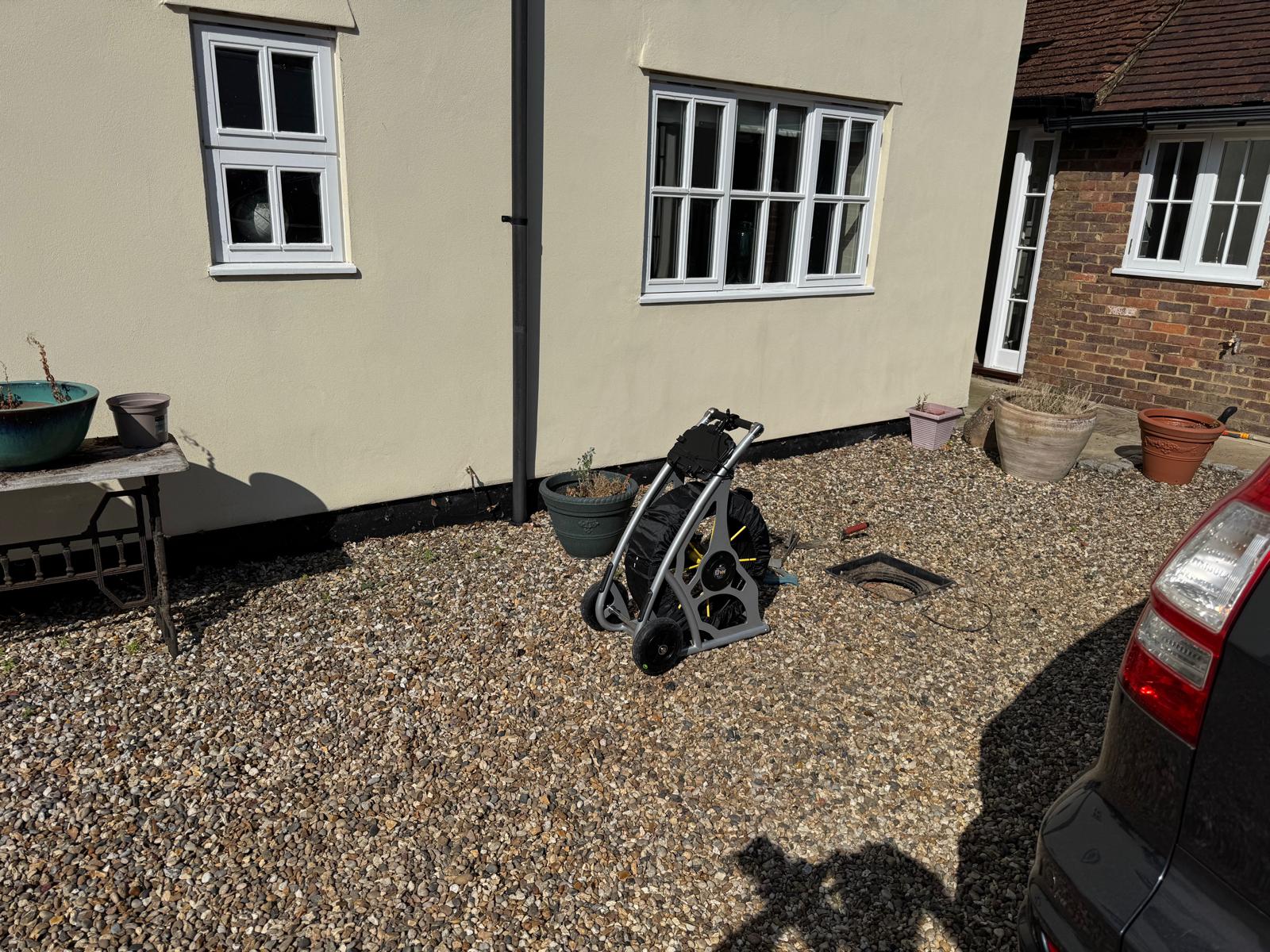
A specialist private drainage survey before exchange of contracts can help the buyer, building surveyor and solicitor establish what is present, identify significant concerns and understand whether further investigation or remedial work is required.
Who Is This Guide For?
This guide is intended for:
- Homebuyers purchasing a property with private drainage
- Sellers preparing information before marketing a property
- Building surveyors who have identified private drainage or recommended further investigation
- Solicitors and conveyancers reviewing the property's drainage arrangements
- Estate agents assisting with enquiries about an off-mains property
- Property owners who cannot clearly identify their existing wastewater system
Where a conventional building survey or legal enquiry identifies uncertainty, a specialist investigation can provide further evidence about the physical drainage system.
If your Level 3 or Level 2 home survey has recommended further checks, our guide explains how to arrange the right follow-up: Does a Level 3 Home Survey Include a Drainage Survey?
1. Establish What Type of System Serves the Property
The terms septic tank, sewage treatment plant and cesspool are sometimes used interchangeably, but they describe different systems.
Septic tank
A septic tank provides primary treatment by allowing solids to settle inside the tank.
In a conventional arrangement, the liquid effluent leaves the tank and enters a drainage field, where the surrounding ground provides further treatment.
Some installations include an additional secondary treatment stage after the septic tank. The complete treatment process must therefore be established rather than judging the system from the first tank alone.
Sewage treatment plant
A packaged sewage treatment plant treats wastewater to a higher standard using mechanical and usually electrical components.
Depending on the system and applicable requirements, treated effluent may discharge to a drainage field or an appropriate surface-water outfall.
Treatment plants generally require electricity, routine servicing and periodic replacement of components.
Cesspool
A cesspool is a sealed storage tank with no discharge outlet.
All wastewater must be collected and removed by a registered waste carrier. This can result in considerably more frequent emptying than would be required for a septic tank or treatment plant.
The system type should be verified rather than accepted solely from an estate-agent description or an owner's recollection.
2. Ask the Seller for the Available Records
When a property with a septic tank or small sewage treatment plant is sold, the seller must provide the new operator with written information about the system. Buyers and their solicitors should request:
- A description of the treatment and drainage system
- The location of the tank, drainage system and final discharge point
- Details of alterations made to the system
- Maintenance instructions
- The manufacturer's manual, where available
- Servicing and maintenance records
- Tank-emptying records
- Installation date and installer information
- Planning and Building Regulations records
- Environment Agency permit details, where applicable
- Details of any shared ownership or maintenance arrangements
- Previous reports, repairs or complaints
Missing documents do not automatically prove that a system is defective or non-compliant.
However, missing records may prevent important points from being verified. The physical inspection and documentary evidence should be considered together.
3. Establish Where the Wastewater Discharges
Locating the tank is not enough. The final discharge destination also needs to be understood.
Possible arrangements include:
- A drainage field
- A sewage treatment plant discharging to a ditch or watercourse
- A septic tank followed by a secondary treatment system
- An individually permitted Environment Agency discharge
- A shared private drainage system
- An older or non-standard soakaway
- A borehole, shaft or deep infiltration structure
- An unknown or inaccessible discharge point
A conventional septic tank usually discharges through a drainage field.
Untreated effluent directly from a septic tank cannot normally discharge to a stream or ditch under the General Binding Rules. However, a system containing a septic tank may incorporate suitable secondary treatment capable of producing effluent clean enough for a lawful surface-water discharge.
That discharge may be covered by the General Binding Rules or by a site-specific Environment Agency environmental permit.
The correct question is therefore not simply:
“Does the septic tank discharge to a ditch?”
It is:
“What treatment does the wastewater receive before the final discharge, and what rules or permission cover that arrangement?”
Where the destination or treatment process is unclear, further drainage investigation and consultancy may be required.
4. Look for Signs of Poor Performance
Potential warning signs include:
- Slow-draining toilets, sinks, baths or showers
- Recurring blockages
- Gurgling drainage
- Sewage smells
- High water levels inside chambers
- Wastewater backing up towards the property
- Wet or boggy ground around the tank or drainage field
- Sewage or grey water appearing at the surface
- Dark, cloudy or odorous effluent at an outfall
- A treatment-plant alarm
- A pump, blower or motor that is not operating
- Damaged or unsafe access covers
- Visible cracking, deterioration or root ingress
- Surface water entering the foul system
- Unusually frequent emptying requirements
Some faults are intermittent.
A drainage field may struggle during wet weather or periods of high groundwater while appearing satisfactory in dry conditions. A lightly occupied property may also place less demand on the system than the buyer's intended use.
The absence of a smell or blockage during a viewing does not confirm that the complete system is in satisfactory condition.
5. Check Whether the System Is Suitable for the Property
The system must have sufficient capacity for the property and its maximum anticipated occupancy. Capacity should be considered particularly where:
- The property has been extended
- Bedrooms or bathrooms have been added
- An annexe has been connected
- Several properties share the system
- A dwelling has been divided
- Holiday accommodation has been created
- The buyer intends to change the property's use
- Surface water may be entering the foul system
A system that served the property historically may not be adequate for its current layout or future occupancy.
The available design information, number of connected properties, number of bedrooms and daily discharge volume may all need to be reviewed.
6. Consider the Drainage Field
A drainage field distributes septic-tank or treated effluent through perforated pipes laid in trenches. The surrounding ground provides further treatment.
It is not the same as a rainwater soakaway or a pit filled with crates or rubble.
Potential concerns include:
- Permanently wet or unsuitable soil
- High groundwater
- Insufficient available area
- Vehicles regularly crossing the drainage field
- Buildings, patios or hardstanding constructed over it
- Tree-root intrusion
- Surface water overloading the system
- Solids escaping from a poorly maintained tank
- Effluent appearing at ground level
- An unknown or undocumented location
The complete condition of a buried drainage field cannot normally be confirmed through CCTV alone.
Its location, apparent performance, surrounding ground conditions and available design information should all be considered. Where replacement is proposed, appropriate foul-water percolation testing and design may be required.
7. Check Whether Rainwater Enters the Foul System
Roof water and other surface water should not normally enter a septic tank or sewage treatment plant.
Rainwater can overload the system, reduce treatment performance and force wastewater towards the drainage field or outfall faster than intended.
A specialist investigation may use flow testing, dye testing and CCTV drainage inspection to establish whether:
- Downpipes enter the foul drainage
- Yard gullies connect to the private wastewater system
- Foul and surface-water pipes have been cross-connected
- An extension introduced incorrect connections
- A failed rainwater soakaway has been redirected into the foul system
This can be particularly important where problems occur only during heavy or prolonged rainfall.
9. Check Access for Maintenance and Replacement
A system may operate correctly but still be difficult or expensive to maintain. Consider whether:
- A waste tanker can reach the property
- The emptying-hose route is practical
- Tank and chamber covers can be opened
- Covers have been buried beneath landscaping, patios or decking
- A treatment plant can be accessed for servicing
- Pumps, blowers and other components can be removed
- The outfall can be inspected
- Access depends on neighbouring land
- A replacement system could be installed without major demolition
Restricted access can increase routine costs and complicate future repairs or replacement.
10. Establish Whether the Evidence Demonstrates Compliance
In England, qualifying small sewage discharges may operate without an individual Environment Agency permit when all applicable General Binding Rules are satisfied. The assessment can depend on:
- The type of treatment system
- The final discharge destination
- The daily discharge volume
- The age and history of the discharge
- Changes made to the system
- Treatment performance
- Maintenance and emptying
- Proximity to public sewers
- Groundwater and environmental constraints
- Whether pollution is occurring
- Any Environment Agency permit and its conditions
A system that does not fall within the General Binding Rules may still operate lawfully under an Environment Agency environmental permit.
Where Flowcraft can inspect the relevant parts of the system and all necessary records, permits and environmental information are available, we can provide a professional conclusion on whether the evidence demonstrates compliance with the applicable requirements.
If essential information is missing or part of the system cannot be verified, the report will explain what remains unconfirmed and what additional enquiries or investigations are required.
Official Environment Agency guidance
For the regulatory detail, read our guide to the General Binding Rules in England.
11. Arrange the Survey Before Exchange of Contracts
A specialist survey, such as our septic tank and drainage survey package, should ideally be completed before exchange. This gives the buyer time to:
- Obtain access through the seller or estate agent
- Locate and uncover inspection points
- Request missing records
- Complete additional investigations
- Understand significant defects
- Obtain likely remedial costs
- Review compliance information
- Discuss the findings with the building surveyor and solicitor
- Agree responsibility for any required work
- Make an informed decision before taking responsibility for the system
If significant problems are discovered after completion, the new owner may immediately become responsible for maintenance, repairs, upgrading or regulatory action.
What Should a Private Drainage Survey Include?
The correct scope depends on the property and the information already available. A private drainage and wastewater survey may include:
- Inspection of accessible foul and surface-water chambers
- CCTV inspection of suitable drainage
- Flow and dye testing
- Investigation of pipe routes and connections
- Inspection of the accessible tank or treatment plant
- Review of pumps, alarms and visible mechanical components
- Investigation of the apparent discharge destination
- Consideration of the drainage field or surface-water outfall
- Review of maintenance and emptying records
- Review of Environment Agency permit information
- Photographs and recorded observations
- Identification of defects and limitations
- A written report with clear findings and recommendations
- A professional compliance conclusion where sufficient evidence is available
The survey should clearly distinguish between what has been observed, what has been reported by others, what has been verified and what remains unconfirmed.
Private Drainage Surveys From Flowcraft
Flowcraft provides private drainage and wastewater surveys for homebuyers, sellers, homeowners, building surveyors, solicitors and property professionals across Hertfordshire, Buckinghamshire and Bedfordshire.
We combine practical drainage investigation with clear written reporting.
Our approach is to establish how the system works, record the available evidence and explain any genuine concerns before recommending remedial work.
Frequently Asked Questions About Buying a Property With a Septic Tank
Is a septic-tank survey required when buying a house?
It is not automatically required for every purchase. However, a specialist survey is advisable where the property relies on private drainage and its condition, treatment process, discharge destination, maintenance history or regulatory position has not been adequately established. A building surveyor, solicitor or lender may also recommend further investigation.
What information should the seller provide?
The seller should provide written details of the treatment and drainage system, the location of its main components and discharge point, alterations made to it and the required maintenance arrangements. Available manuals, servicing records, emptying receipts and permit information should also be supplied.
Can a septic tank discharge into a stream or ditch?
Untreated effluent from a conventional septic tank cannot normally discharge directly to a stream or ditch under the General Binding Rules. However, a system containing a septic tank may include suitable secondary treatment. Where the complete system produces effluent of the required quality, a surface-water discharge may be permissible under the General Binding Rules or an Environment Agency permit. The entire treatment and discharge arrangement must be assessed.
Does an old septic system automatically need replacing?
No. Age alone does not establish that replacement is necessary. Its condition, treatment process, discharge destination, maintenance history, performance, applicable rules and any Environment Agency permit must all be considered.
Can Flowcraft confirm whether a system is compliant?
Yes. Where the relevant system can be inspected and all necessary records, permits and environmental information are available, Flowcraft can provide a professional conclusion on whether the evidence demonstrates compliance. Where essential evidence is missing, the report will identify what remains unconfirmed and the additional checks required.
Is a drainage field the same as a soakaway?
No. A drainage field distributes septic-tank or treated effluent through perforated pipes laid in trenches so the surrounding ground can provide further treatment. A conventional soakaway is intended primarily for clean surface water such as rainfall from roofs or paved areas.
Related Services
If this guide has answered the question you came with, these are the services it leads to.
Related Guidance
Related guides from the Flowcraft Knowledge Centre.
What Is a Sewage Treatment Plant?
What Is a Drainage Field?
General Binding Rules for Septic Tanks and Sewage Treatment Plants in England
About the author
Jamie Hopcraft
Jamie Hopcraft is the director of Flowcraft Groundworks Ltd and has more than 20 years of practical experience in drainage, groundworks and below-ground investigations.
Arrange a Private Drainage and Wastewater Survey
If you are buying a property with a septic tank, sewage treatment plant or unknown private drainage, send us:
- The property address
- Estate-agent particulars
- Information supplied by the seller
- Available plans, records or permits
- Your proposed purchase timescale
- Any concerns raised by your building surveyor or solicitor
We can review the information, recommend an appropriate investigation scope and provide a clear quotation.