
Why Is My Soakaway
Overflowing When It Rains?
A restriction in the pipework, reduced infiltration or more runoff than the system can manage. The first step is establishing where the water is backing up.
- Author
- Jamie Hopcraft, Flowcraft Groundworks Ltd
- Category
- Soakaways & Surface Water
- Published
- Published
An overflowing rainwater soakaway can indicate a restriction in the incoming pipework, reduced infiltration into the surrounding ground or more runoff than the system can manage. The first step is to establish where the water is backing up and which parts of the system are affected.
This guide covers surface-water soakaways receiving rainwater. Problems with a drainage field serving a septic tank or sewage treatment plant need a separate wastewater assessment.
Flowcraft provides soakaway investigation across Hertfordshire, Buckinghamshire and Bedfordshire. We investigate the existing arrangement before recommending repair or replacement.
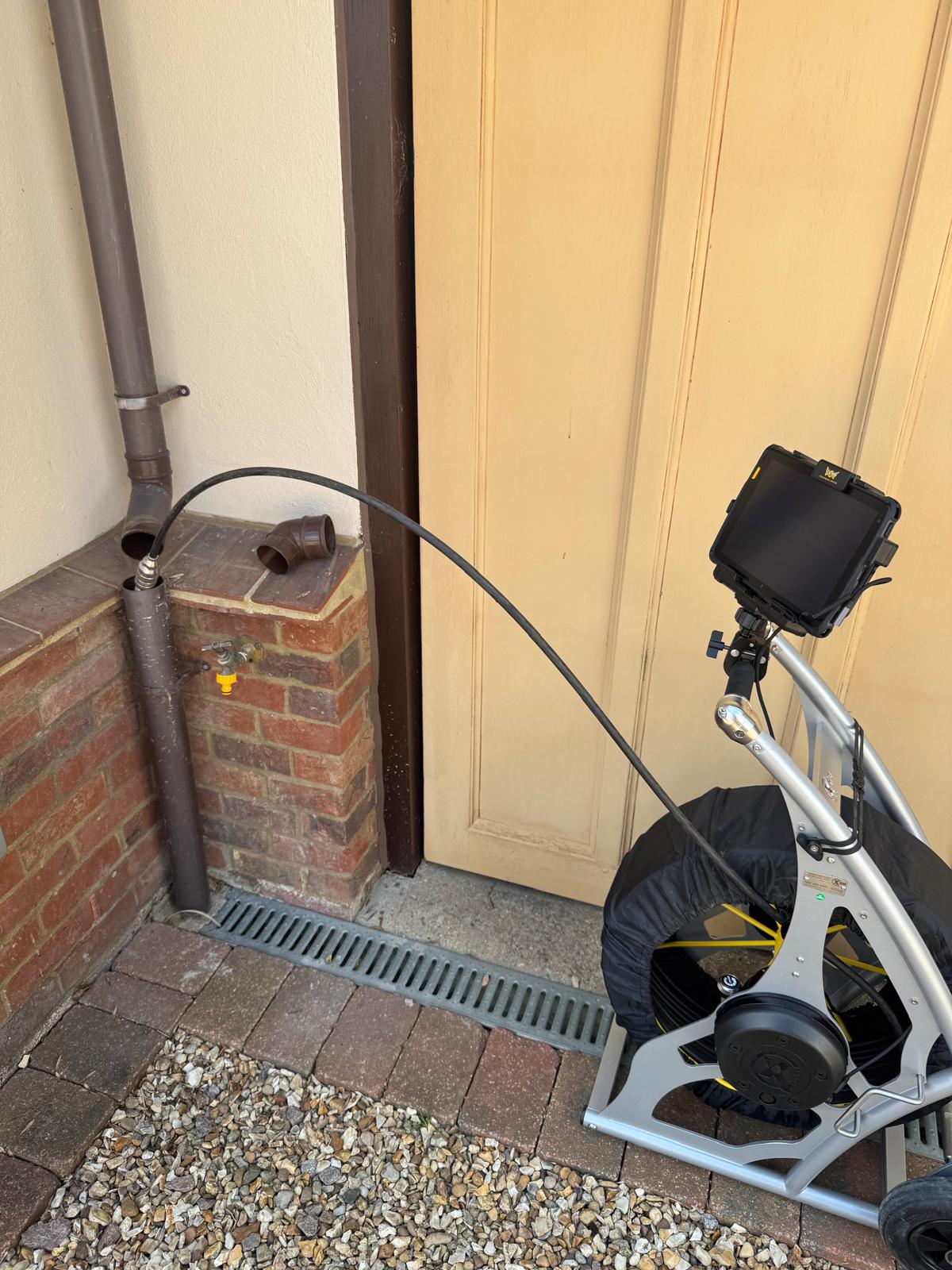
Confirm where the rainwater goes
An overflowing gully at the bottom of a downpipe does not prove that the soakaway has failed. The restriction could be between the gully and the soakaway, or the drain may discharge somewhere different from where you expect.
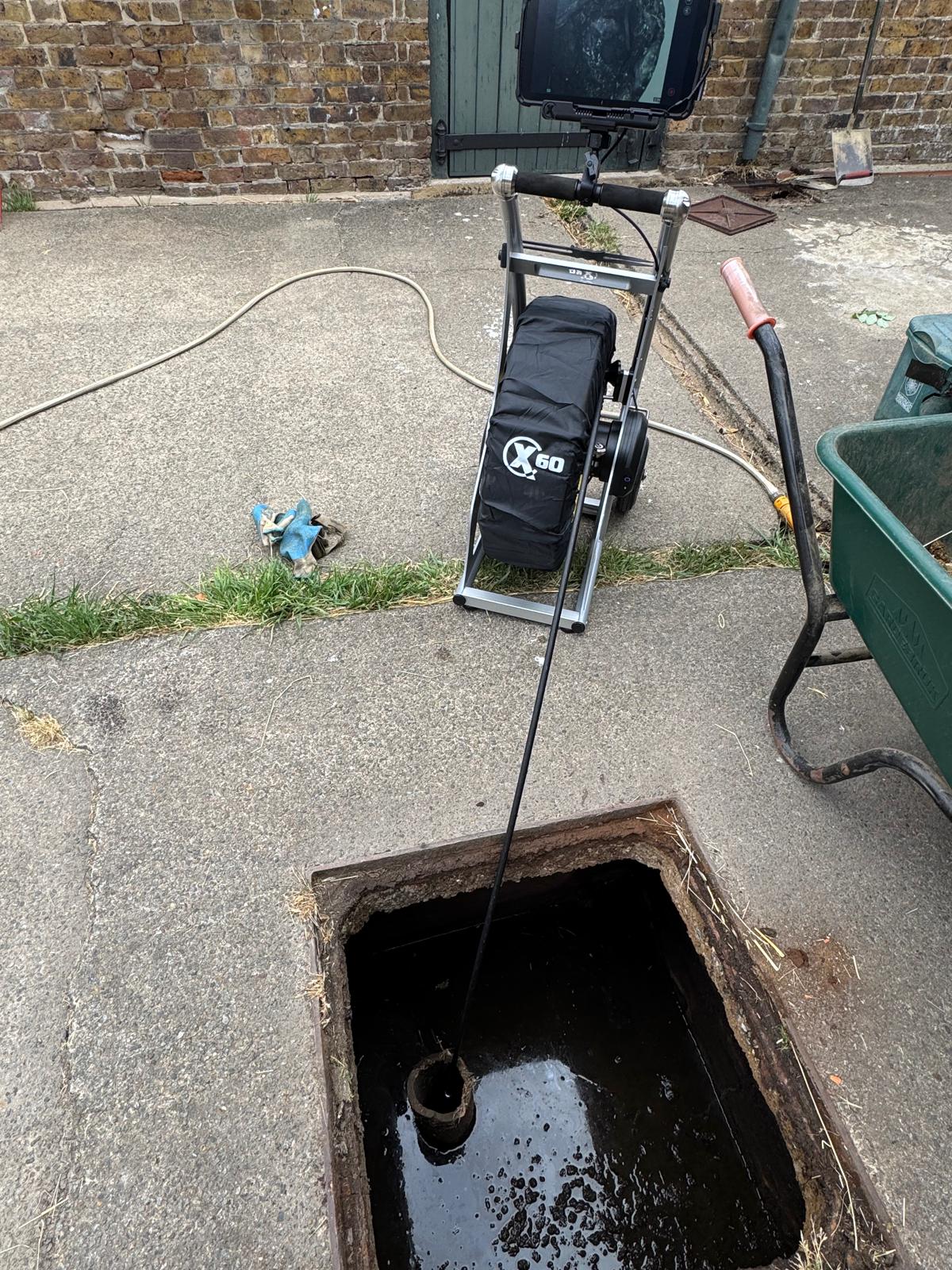
The investigation should start by checking the drainage route. Existing drawings can help, alongside inspection of accessible chambers and CCTV drainage surveys where appropriate. If the route or destination is uncertain, tracing may form part of the work.
Tell us whether one downpipe is affected or several connected drains are backing up. That helps determine which sections to inspect first.
Why performance can change
The receiving ground
A rainwater soakaway provides storage while water infiltrates into the ground. Its performance depends on the receiving soil as well as the size of the storage space. Long wet periods can reduce performance, and accumulated sediment needs consideration when assessing maintenance.[1]
More runoff than before
An extension or additional hardstanding may have increased the area draining to an older system. Check whether new pipework was connected and whether the soakaway was assessed at the time.
Groundwater conditions
A system should be assessed with seasonal conditions in mind; a dry excavation in summer does not describe the highest groundwater level. England's national SuDS standards specifically address wet winter conditions when assessing new infiltration drainage.[2]
These are possible explanations, not a diagnosis from the weather alone. An investigation should distinguish a pipework problem from an infiltration or capacity problem before deciding what to do.
What to record before the visit
Send photographs of the overflowing location and the wider drainage layout, taken from a safe position. Useful details include:
- When the problem started and whether it happens in every rainfall event.
- Whether water clears between showers or remains backed up.
- Which downpipes, gullies or chambers are affected.
- Any recent roof extensions, new paving or drainage alterations.
- Previous clearing, repairs or soakaway work.
- Available plans, installation records or test reports.
Avoid opening covers during flooding. Water can hide damaged or displaced covers and other hazards. Follow official guidance if flooding threatens the property or anyone's safety.[3]
What an investigation can include
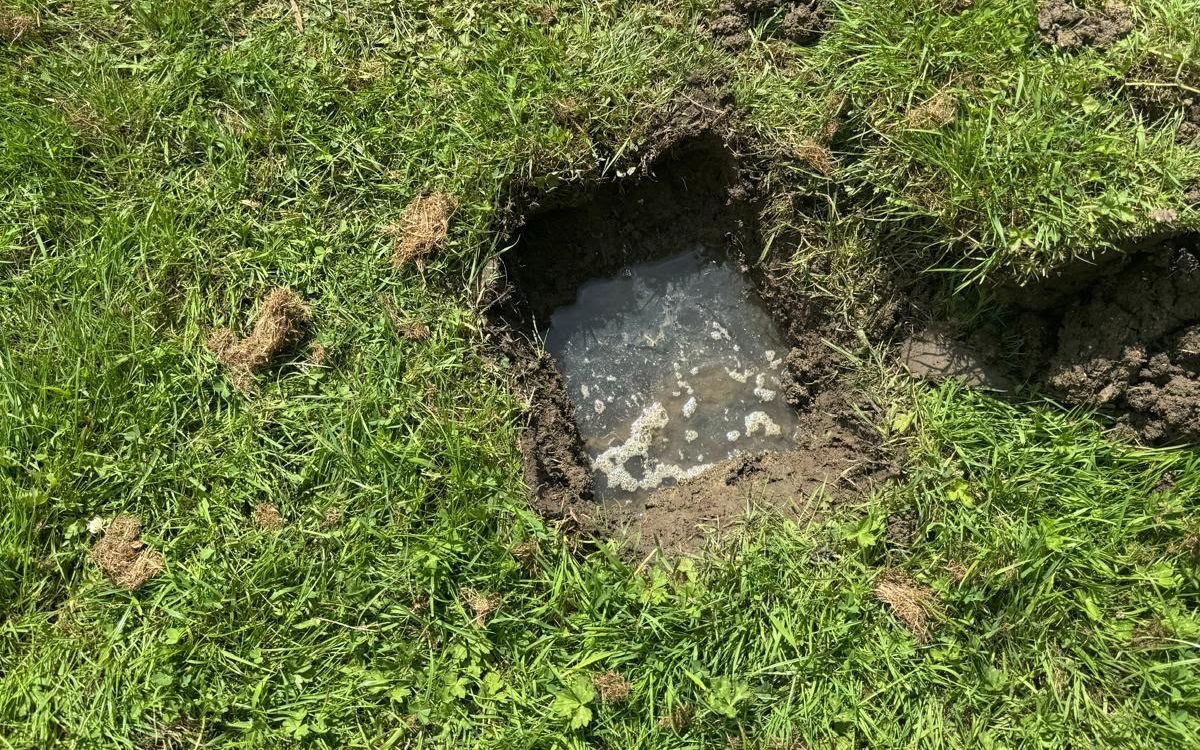
The work may include locating the system, inspecting accessible pipework and reviewing its apparent construction and condition. Cleaning may be needed to see parts of a drain clearly, subject to access and the agreed scope.
Where practical, observing water levels and how they change can help assess the existing system. The report should distinguish direct observations from assumptions, particularly when the soakaway itself cannot be inspected fully.
Testing an existing soakaway is a different exercise from obtaining a design infiltration rate at a proposed new location. If replacement or enlargement is being considered, a BRE 365 soakaway test may be needed to inform the design. The BRE guide describes site investigation and design calculations for rainwater soakaways.[4]
Repair or replacement
The recommendation should follow the findings. A damaged connection may need a local repair. Maintenance may be appropriate where accessible deposits or obstructions are affecting performance. Repeated problems after clearing deserve a closer review of the wider system.
Replacement needs a clear reason and a suitable design. Ask what evidence supports the proposed location, how much area it will drain and what further testing is required before construction.
If infiltration is unsuitable, drainage consultancy can help review alternative surface-water arrangements. The available outlet, levels, permissions and maintenance requirements will affect the options.
Avoid committing to excavation before those questions are resolved.
Frequently asked questions
Does an overflowing downpipe mean the soakaway needs replacing?
No. The cause could be in the gully, connecting pipework or soakaway. Checking the route and accessible components helps establish which part needs attention.
Can jetting fix a blocked soakaway?
Jetting may clear suitable connecting pipework or accessible obstructions. Its usefulness depends on the system and fault. It should not be offered as a guaranteed remedy for poor infiltration into the surrounding ground.
Would a bigger soakaway stop the overflow?
That needs testing and design. Additional storage may be relevant, but the ground must also accept the water and the location must be suitable. The proposal should account for the area draining into the system and site constraints.
Can you investigate without digging up the whole garden?
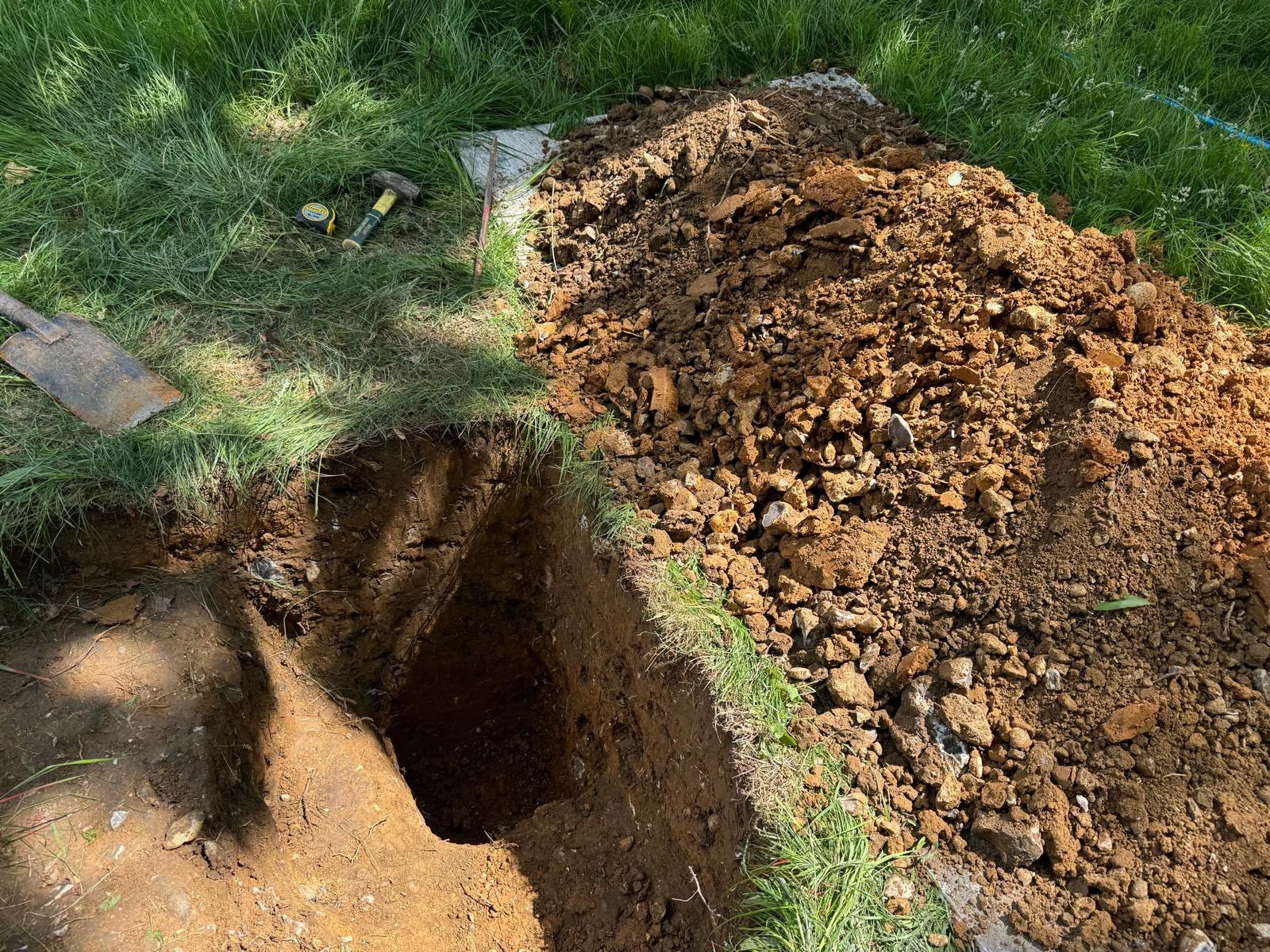
We start with the available information and accessible drainage. Camera inspection or tracing may help narrow the investigation, but some systems need local excavation to establish their construction or condition. We agree that scope before proceeding.
Arrange a soakaway investigation
If your rainwater drainage repeatedly backs up in wet weather, send Flowcraft the site address, photographs and any information about the existing system.
We can review the symptoms, explain the proposed investigation and provide a quotation. Written findings and recommendations can be included within the agreed scope, with remedial work considered once the cause is understood.
Email jamie@flowcraft.uk or use our enquiry form to discuss your soakaway problem.
Related Services
If this guide has answered the question you came with, these are the services it leads to.
Related Guidance
Related guides from the Flowcraft Knowledge Centre.
About the author
Jamie Hopcraft
Jamie Hopcraft is the director of Flowcraft Groundworks Ltd and has more than 20 years of practical experience in drainage, groundworks and below-ground investigations.
Rainwater Backing Up
In Wet Weather?
Send us the site address, photographs and any information about the existing system. We can review the symptoms, explain the proposed investigation and provide a quotation.