
Why Does My Garden Flood
After Heavy Rain?
Where the water comes from decides what to investigate next. A homeowner guide to recurring garden flooding and what to record before a visit.
- Author
- Jamie Hopcraft, Flowcraft Groundworks Ltd
- Category
- Soakaways & Surface Water
- Published
- Published
A garden floods when water arrives faster than it can soak into the soil or leave through the drainage system. The cause may be compacted ground, changes in levels, runoff from surrounding surfaces or a drainage fault. More than one problem can be present.
The useful first question is where the water comes from. That determines whether the next step is soil improvement, a drainage investigation or a wider review of how water moves around the property.
Flowcraft provides garden flooding and surface-water drainage investigations across Hertfordshire, Buckinghamshire and Bedfordshire. We establish the likely cause and explain the options before recommending work.
Start with where the water appears
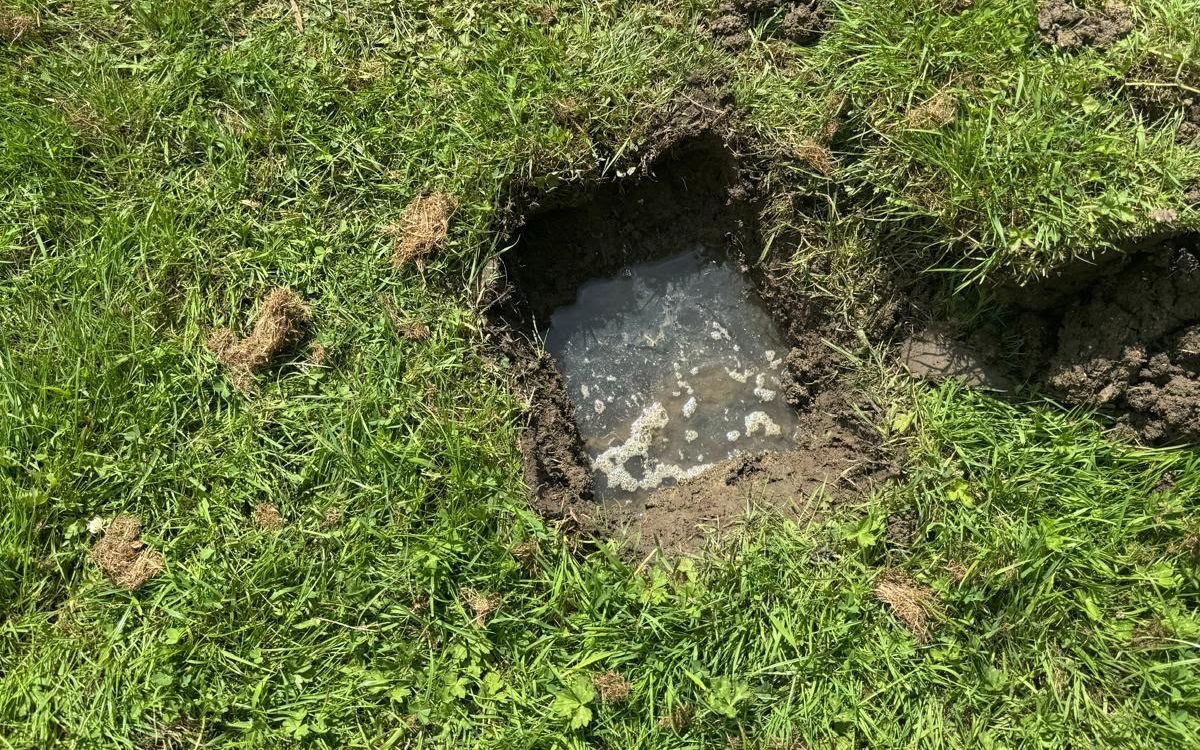
The pattern of flooding helps decide what to investigate. Water spreading across a lawn needs a different starting point from water rising out of a gully.
Look for the first place water becomes visible. Does it enter from higher ground, collect against a patio edge or emerge around a drain? Record this from somewhere safe. The position of the largest puddle may simply be the lowest point, rather than the source.
Note whether the problem follows a short downpour or several days of rain. Photographs taken as flooding develops are more useful than a single photograph after the whole area is underwater.
Common causes of garden flooding
More than one of these can be present at the same property. The investigation establishes which apply.
Soil and paving
Poorly draining or compacted soil can leave water sitting near the surface. Heavy foot traffic or machinery can make compaction worse. Hard paving also changes the amount of rain that reaches the soil and where runoff collects.
Changes in levels
Changes in levels can concentrate runoff in a low part of the garden. An extension, new patio or altered driveway may change the route water takes. Knowing when the problem started helps focus the investigation.
A blocked or damaged pipe
A blocked or damaged pipe is another possibility where flooding is centred on a drain. If that pipe serves a rainwater soakaway, its route and destination also need checking.
Flooding from beyond the property
Flooding may extend beyond the property's own drainage. Overflowing public sewers and flooding from roads or watercourses require the relevant organisation to be involved. Report suspected public sewer flooding to your water company.[2]
The RHS explains the soil and paving causes in its guidance on waterlogging.[1]
Where flooding is centred on a drain that serves a rainwater soakaway, our guide to why a soakaway overflows when it rains covers that situation in more detail.
Useful information to collect
Before arranging an investigation, gather what you can without digging or lifting covers:
- The property address and photographs of the affected area.
- Where water first appears and the direction it travels.
- How long it remains after rain stops.
- Whether the problem is new, recurring or getting worse.
- Details of recent building, paving or landscaping work.
- Any drainage drawings or information about existing drains.
Include photographs of the wider garden and nearby buildings. Close-up pictures alone can make it difficult to understand the levels and layout.
If the ground stays wet through a prolonged dry spell, mention that too. It is a reason to investigate other water sources as well as rainfall.
What a drainage investigation can establish
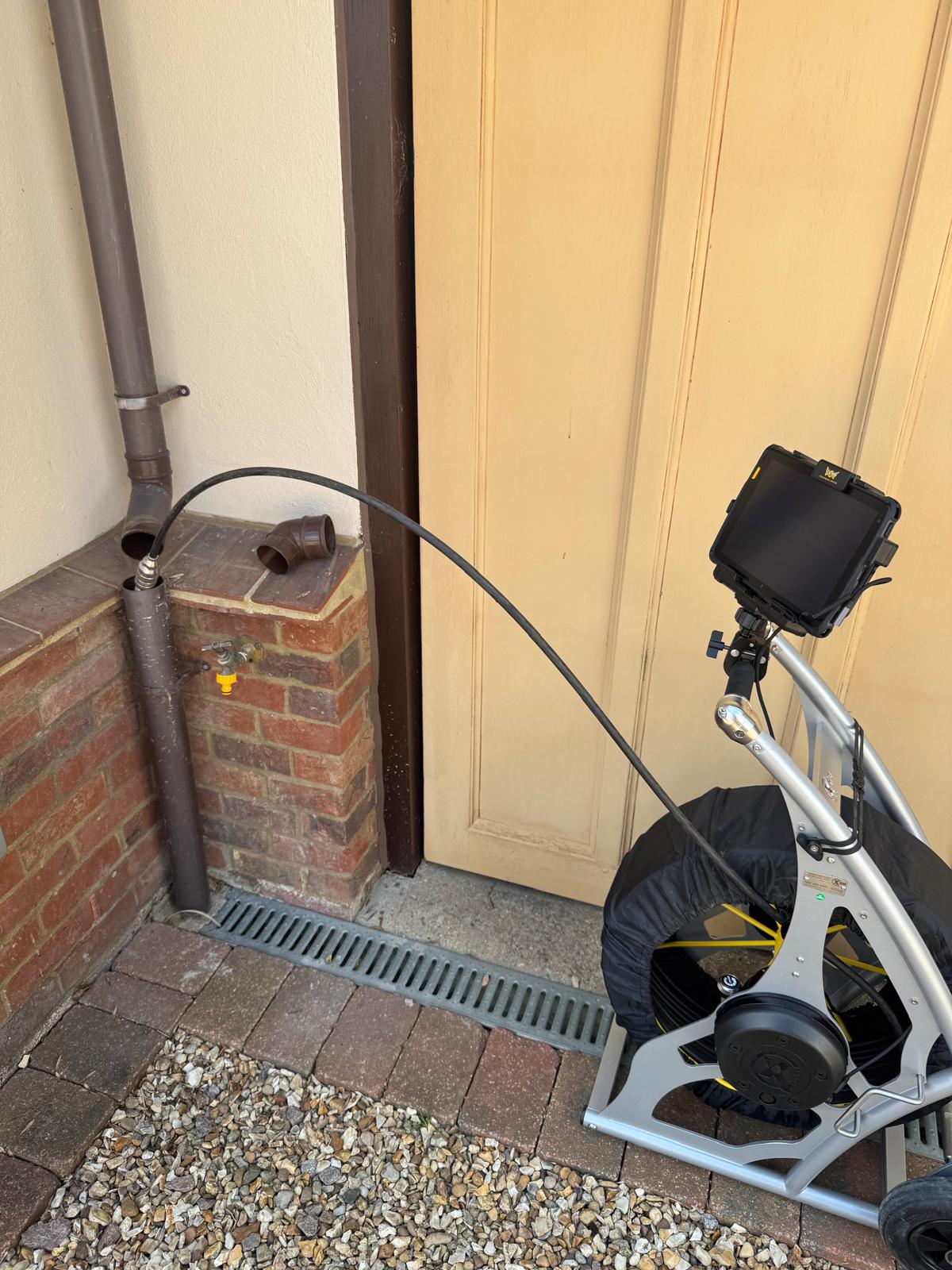
The scope should follow the symptoms. A visit may include reviewing the levels, inspecting accessible drainage and checking where roof or paved-area runoff goes. CCTV drainage surveys can help inspect connected pipework where suitable access is available.
If a new infiltration system is being considered, site-specific testing may be needed. A BRE 365 soakaway test provides information for surface-water soakaway design. A wet patch in a lawn does not provide that design information.[3]
Ask for the findings to explain what was observed, what remains uncertain and what further work is recommended. This helps you compare proposals and understand why a particular solution is appropriate.
Choosing work that addresses the cause
The remedy could be maintenance, a local pipe repair, changes to surface levels or a designed drainage system. Some gardens may benefit from soil improvement or suitable planting; others need a way to collect and convey water.
A proposed drain needs an appropriate destination for that water. Before accepting an installation quotation, ask where it will discharge, how that route has been checked and what permissions or further design are needed.
Avoid choosing a soakaway solely because there is space to bury one. Its suitability depends on the ground and the drainage requirements. Investigate first so the quotation is based on a workable proposal.
Frequently asked questions
Does a flooded garden always need new drains?
No. The cause may be related to soil, levels or maintenance. New drainage is appropriate when the investigation shows how it will improve the problem and where the collected water can go.
Can a French drain fix a waterlogged lawn?
It can help in suitable conditions, but the collection route and final discharge need to work together. A gravel trench alone does not establish that the water has somewhere suitable to go.
Should I wait until the garden dries out before contacting Flowcraft?
No. Contact us while the symptoms are clear and send photographs taken safely. We can agree an appropriate time for the visit. Wet-weather evidence can still be useful if conditions are dry when we attend.
Can a CCTV survey explain all garden flooding?
A camera can help investigate accessible pipes. Ground levels, soil conditions and water entering across the surface may need separate assessment. We can discuss the most useful starting point from your description and photographs.
Arrange a garden drainage investigation
Send Flowcraft your address, photographs and a short description of when the flooding occurs. We will review the information and provide a quotation for the appropriate investigation, with written findings where agreed.
Email jamie@flowcraft.uk or use our enquiry form to discuss your garden drainage problem.
If flooding presents an immediate danger, follow the official flood guidance and contact the emergency services where necessary. Avoid entering floodwater.[2]
Related Services
If this guide has answered the question you came with, these are the services it leads to.
Related Guidance
Related guides and investigations from the Flowcraft Knowledge Centre.
About the author
Jamie Hopcraft
Jamie Hopcraft is the director of Flowcraft Groundworks Ltd and has more than 20 years of practical experience in drainage, groundworks and below-ground investigations.
Garden Flooding
After Heavy Rain?
Send us your address, photographs and a short description of when the flooding occurs. We will review the information and provide a quotation for the appropriate investigation.